This article contains affiliate links. We may earn a small commission if you purchase through these links, at no extra cost to you.
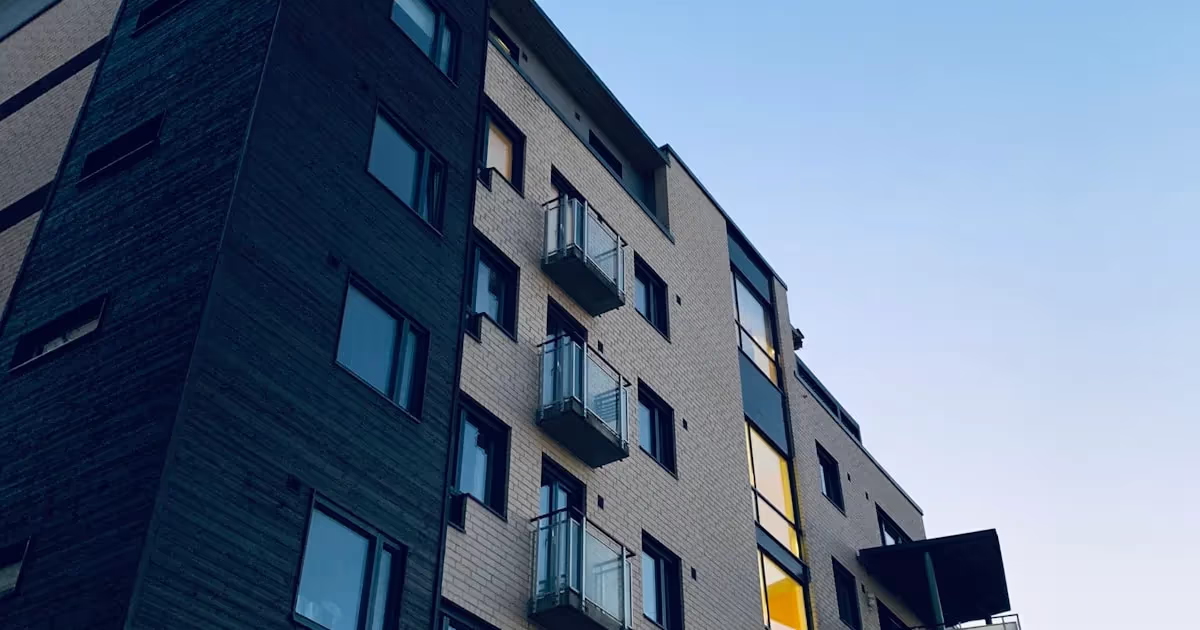
Downtown Tampa. A 640-square-foot one-bedroom apartment on the fourth floor.
That was me when everything shut down. My wife and I standing in the kitchen — which was also basically the living room — realizing we had maybe four days of food, one case of bottled water, and a flashlight with dead batteries somewhere in a junk drawer. We weren’t even sure which junk drawer.
The grocery stores went sideways within 48 hours. Not empty, not at first, but the shelves were getting thin and the lines stretched around the building and everyone in line had this look. You know the look. That wide-eyed, cart-full-of-toilet-paper look that says nobody in this building thought about this until right now.
Meanwhile, I’m supposed to be the guy who knows this stuff.
I’d been prepping for years at that point. Had a whole setup at my buddy Greg’s property outside Ocala. Buckets of rice, water filtration, the works. Forty-five minutes away. In an apartment? I had nothing. Absolutely nothing. My entire prep strategy had been “I’ll just drive to Greg’s place.” As if the highways would be clear. As if gas stations would be open. As if Greg would even be there.
Dumb. Really dumb.
So I figured it out. Took me about six months of trial and error, but I turned that tiny apartment into something that could keep two adults alive and comfortable for three weeks without leaving the building. And I did it without my landlord noticing, without spending a fortune, and without turning the place into a bunker that scared the neighbors.
Here’s what I learned.
Stop Thinking Like a Homesteader
This is the first mistake apartment preppers make and almost everyone makes it. You go on YouTube, watch some guy on 40 acres in Montana showing his root cellar and his rainwater collection system and his backup generator, and you think: well, I can’t do any of that. So why bother.
Nope.
Different game. Apartment prepping isn’t about scaling down a homestead. It’s about playing a completely different sport. You have constraints — no yard, no garage, shared walls, a landlord who might have opinions — but you also have advantages that rural preppers don’t.
You’re close to resources. Hospitals, fire stations, supply distribution points — all within walking distance in most cities. You’ve got running water from a municipal system that has backup power. You’ve got neighbors, which can be a liability OR an asset depending on whether you’ve bothered to meet them. (Meet them.)
My neighbor across the hall, this retired nurse named Dorothy, ended up being the most valuable prep I had. When my wife got a bad cut on her hand opening a can — because of course we didn’t own a decent can opener — Dorothy had butterfly bandages, antiseptic, and thirty years of wound care experience. All for the cost of sharing some of our canned chili.
That’s urban survival. People are the resource.
Water Storage When You’ve Got No Storage
Water is the problem. It’s always the problem, but in an apartment it’s THE problem because water is heavy and it takes up space you don’t have.
One gallon per person per day. That’s the baseline. For two people, two weeks, that’s 28 gallons. At 8.3 pounds per gallon, that’s 232 pounds of water you need to put somewhere in your apartment without the floor caving in or your significant other leaving you.
Here’s what worked for me.
Under the bed. Those 7-gallon Aqua-Tainer jugs from Walmart — about $12 each — fit perfectly under a standard bed frame. I got four under there. Twenty-eight gallons. Done. Nobody sees them. Nobody trips over them. My wife didn’t even notice for two weeks and she’s the one who vacuums under there.
What about the weight though? Yeah. 232 pounds on a fourth-floor apartment. I thought about this too. Residential floors are rated for at least 40 pounds per square foot. Four jugs spread under a queen bed is about 10 pounds per square foot including the bed and two people sleeping in it. You’re fine. Your refrigerator weighs more than that when it’s full.
Also — and this is the part most people forget — your hot water heater holds 30 to 50 gallons of drinkable water RIGHT NOW. If the city water goes out, you turn off the intake valve, hook a hose to the drain at the bottom, and gravity feeds you clean water for days. Most apartment water heaters are in a utility closet. Go find yours today. Right now. I’ll wait.
The bathtub is your emergency reservoir. You can buy a WaterBOB for about $35 — it’s basically a giant food-grade bladder that sits in your tub and holds 100 gallons. When you know something’s coming — storm warning, water main break, whatever — you fill it up. That’s 100 gallons of clean water in a space you weren’t using anyway.
I keep a Sawyer Squeeze in my kitchen drawer too. Thirty bucks, filters bacteria and protozoa, and if things get really bad, I can filter water from the apartment complex’s decorative fountain. Which is disgusting. But it beats dying of dehydration. If you want more details on water options, I wrote a whole breakdown on the best emergency water storage containers.
Your Hot Water Heater Is an Emergency Water Supply You Already Own
A standard apartment water heater holds 30–50 gallons of clean, drinkable water. If city water fails, shut the intake valve to prevent contamination, then drain from the valve at the bottom. That’s potentially a week’s supply for two people that costs you nothing and requires no extra storage space. Find your utility closet before you need it.
Food That Fits in a Closet
You don’t need a pantry. You need one closet. One shelf in a closet, honestly.
I reorganized our hall closet — the one that had seventeen jackets we never wore and a broken umbrella and three board games missing pieces — and turned the top two shelves into a two-week food supply for two people. The jackets went to Goodwill. The umbrella went in the trash. Sorry, Monopoly with no hotels.
What goes on those shelves:
Canned goods. Boring but real. Canned chicken, canned tuna, canned beans, canned vegetables. Get the pop-top lids because when the power’s out and you’re trying to use a manual can opener by candlelight, you’ll understand why I’m telling you this. About $1.20 per can average. Forty cans runs you $48 and covers two people for roughly ten days if you’re not being picky.
Rice. A 20-pound bag of white rice from Costco costs about $9 and provides approximately 100 servings. White rice, not brown. Brown rice goes rancid in six months. White rice lasts basically forever if you keep it dry. I transferred mine into a 5-gallon bucket with a gamma seal lid. The bucket sits in the corner of the closet and doubles as a step stool. Dual purpose. Apartment brain.
Peanut butter. Dense calories, long shelf life, no cooking required. You can eat it with a spoon at 3 AM during a blackout and feel like you’re handling things. Which you are.
Ramen. Yeah, I know. It’s not health food. But 48 packets costs about $12 and each packet is 380 calories. You can eat ramen cold in an emergency — just crush it in the bag and eat it like chips. My buddy Travis does this voluntarily, which tells you something about Travis.
Cooking without power. A single-burner butane stove. The Iwatani brand ones run about $25 on Amazon. Each butane canister gives you roughly an hour of cooking time. I keep six canisters. That’s six hours of cooking, which is more than enough for two weeks if you’re not trying to make Thanksgiving dinner.
USE IT NEAR A WINDOW. I cannot say this loud enough. Butane stoves produce carbon monoxide. Crack a window. Use it on the kitchen counter near the window. Better yet, if your building has a balcony, cook out there. My neighbor Jeff used a camp stove in his bathroom with the door closed during a power outage in 2019 and woke up in the hospital. He’s fine now. But the fact that he woke up at all is mostly luck.
Never Use a Camp Stove Indoors Without Ventilation
Butane and propane stoves produce carbon monoxide — the odorless gas that kills people in their sleep. Jeff used a camp stove in his bathroom with the door closed during a blackout and woke up in the hospital. Always cook near an open window, or better yet on a balcony. A battery-operated CO detector ($25) is worth having in any apartment that might use alternative cooking methods during outages.
The Blackout Kit
Power outages in apartments are a different animal than power outages in houses. You can’t run a generator on the fourth floor. You can’t even run one on a balcony — the exhaust will kill you and also your landlord will probably evict you and honestly both outcomes are bad.
So. Battery power and planning.
A portable power station. I use a Jackery 300 that I got for about $250 on a Black Friday deal. It charges phones about 15 times, runs a small fan for a full night, and can power a CPAP machine if you need one. My wife’s dad has sleep apnea and this was actually the thing that convinced him to take prepping seriously. One night without his CPAP and he’s a wreck. Two nights and he needs medical attention.
Charge the power station every three months. Set a reminder on your phone. I forgot once and when I needed it, it was at 14%. Fourteen percent. I was not happy with myself.
Headlamps over flashlights. Every single time. A Black Diamond Spot headlamp costs about $40, lasts 200 hours on low, and keeps your hands free. When you’re trying to cook on a butane stove in the dark while also holding a screaming cat — our cat Mango does NOT handle blackouts well — you need both hands. Trust me.
Candles are fine as backup. But apartment fires during blackouts are a real thing. The Tampa fire department told me they see a spike in structure fires every single time the power goes out for more than a day, and it’s almost always candles. Use LED candles if you can. Yeah, they’re not as cool. Being on fire is also not cool.
Set a Reminder to Charge Your Portable Power Station Every Three Months
A portable power station sitting in a closet will self-discharge to nearly zero in six months. Schedule a recurring phone reminder every three months to top it off — because the one time you need it will be the time you forgot to charge it. A dead power station is as useful as a brick. This three-minute maintenance task is the most common gap in apartment emergency kits.
Security Without Looking Crazy
I’m not going to pretend this isn’t a thing. Apartments are harder to secure than houses. Shared hallways, thin doors, windows that face walkways. During a real emergency — multi-day blackout, supply disruption, civil unrest — some people get desperate. And desperate people do desperate things.
You also can’t turn your apartment door into a fortress without getting evicted. So.
Door reinforcement. A $30 door security bar from Home Depot. The kind that braces under the doorknob and wedges against the floor. Takes two seconds to install, two seconds to remove, leaves zero marks. I’ve had one on my front door every night for three years and my landlord has never noticed.
A doorbell camera. I use a Ring. $50. Battery powered. Takes five minutes to install with the adhesive mount — no drilling. You can see who’s in the hallway before you open the door. During the 2020 weirdness, I checked that camera about forty times a day. Paranoid? Maybe. But I always knew who was out there.
Window film. A roll of 3M security window film costs about $60 and takes an afternoon to apply. It doesn’t make your windows unbreakable. What it does is hold the glass together when someone tries to break it, buying you thirty seconds to react. Thirty seconds is a lot.
And the simplest security measure: know your neighbors. Seriously. I said it before and I’ll say it again. Dorothy across the hall noticed a stranger trying doors on our floor one night at 2 AM and texted me. I’d given her my number three months earlier when I helped carry her groceries. That’s how it works. Community is security.
The Go-Bag Next to the Door
An apartment prepper needs two plans. Plan A is shelter in place. Everything I just described. Plan B is get out.
Plan B has a tighter timeline than you think.
Apartment fires spread FAST. Structural damage from earthquakes or storms can make your building unsafe in minutes. A gas leak in a neighboring unit — happened in my old building in 2018 — means everybody out, right now, and you’re not going back inside for hours. Maybe days.
So I keep a grab bag right next to the front door. Not in the closet. Not in the bedroom. Next to the door, on a hook, where I can snatch it on the way out without thinking. It’s a small 20-liter daypack with three days of basics — water filter, protein bars, phone charger, copies of our IDs in a waterproof bag, $200 in cash in small bills, a change of clothes, and a first aid kit.
That bag gets me from the apartment to Greg’s place in Ocala. That’s all it needs to do. If you want the details on building one of those, I’ve got a whole guide on putting together a 72-hour bug out bag that covers everything.
What I Wish Someone Had Told Me
Prepping in an apartment feels like it doesn’t count. Like you’re playing pretend. Like the real preppers are the ones with land and bunkers and six months of freeze-dried food.
Here’s the thing though. Most emergencies last three to fourteen days. Most of them. And having two weeks of water, two weeks of food, a way to cook, a way to see in the dark, and a plan to leave if you have to — that puts you ahead of about 95% of the people in your building. That’s not nothing. That’s everything.
Start this weekend. Not next weekend. This one. Buy four water jugs. Put them under your bed. Go to the dollar store and buy a bag of rice and some canned beans. Get a flashlight with batteries that actually work.
That’s day one. And day one is the only day that matters.
Take our wilderness survival basics quiz to see where you stand — most of the principles apply to urban scenarios too, and you might be surprised what you don’t know yet.
And if you haven’t already, read the complete guide to emergency preparedness for the full framework. Apartment or house, the fundamentals are the same — water, food, light, communication, and a plan.