This article contains affiliate links. We may earn a small commission if you purchase through these links, at no extra cost to you.
Hurricane Irma. My buddy Marcus called me at eleven o’clock at night — the night BEFORE projected landfall — voice shaking, saying he needed to leave Orlando and had nothing packed.
Nothing.
I drove over there. And I watched this grown man — a guy with a master’s degree in mechanical engineering — throw three phone chargers, a PlayStation 4, and a bag of Doritos into a Hefty garbage bag. No water. No first aid. No flashlight. He grabbed his Xbox controller too, then put it back, then grabbed it again. I just stood in his doorway watching this happen.
No water purification. Not a single bandaid. The man packed a gaming console for a hurricane evacuation.
So look. I’m not telling that story to make fun of Marcus. (Okay, maybe a little. He knows I tell this story. He hates it.) I’m telling it because Marcus is actually smart. He just never built the bag. He knew he should. He’d bookmarked like fourteen YouTube videos about it. Never did it.
And then it was midnight and the storm was twelve hours out and he was stuffing garbage bags in his underwear.
Here’s the thing though. One bag. One weekend to build it. Three days of keeping yourself alive if everything goes sideways. That’s all we’re talking about here.
The Bag Itself (Don’t Make This Weird)
People spend SO much time picking the bag. Weeks. Months. Reading forum threads at 2 AM comparing the Osprey Atmos to the Gregory Baltoro like their life depends on which shade of gray the hip belt is.
Stop.
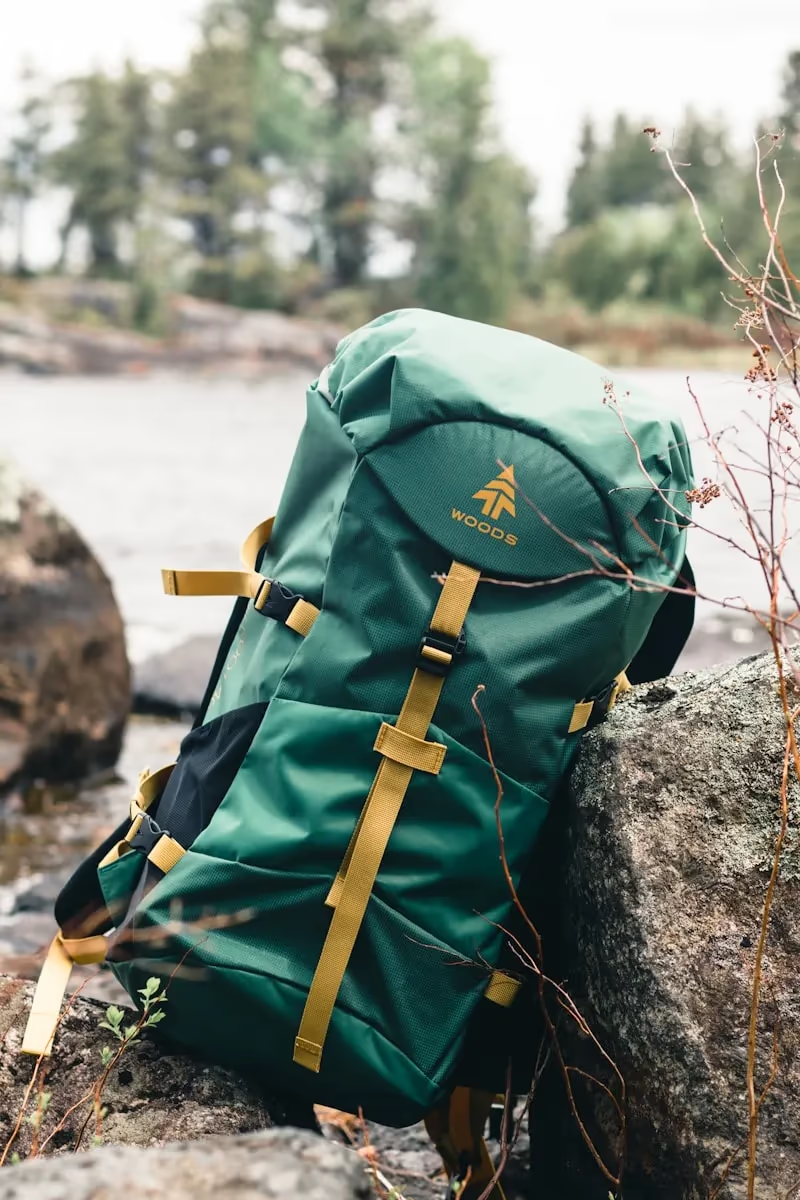
A 40 to 55 liter backpack. With a hip belt. That’s it. That’s the criteria. The hip belt moves weight from your shoulders to your hips and honestly that one detail is the difference between walking five miles feeling fine and wanting to die after one. But beyond that? Doesn’t matter.
I use a Kelty Redwing 50L. Paid $90 on sale at REI. Nothing special about it. The hip belt is padded, the back panel breathes okay, and it hasn’t fallen apart after three years of me being rough with it. Good enough.
Military MOLLE packs work fine too. But — and this is just me — walking through downtown Orlando during an evacuation looking like you raided a surplus store is maybe not the move. Blend in. Gray man theory. Whatever you want to call it.
Keep Loaded Pack Weight Under 20% of Your Body Weight
At 180 pounds that’s a 36-pound max — which sounds like plenty until you start loading water and realize you’re at 40 pounds without food. Test your loaded bag with a 2-mile walk before you need it. If your shoulders are screaming by mile one, start cutting. The bag that’s too heavy to carry is worse than no bag at all.
Keep the loaded pack under 20% of your body weight. At 180 pounds that’s 36 pounds max, which sounds like plenty until you actually start loading water and food and realize you’re already at 40 wondering where it went. It’s the water. It’s always the water.
Test the bag before you need it. Load it up and walk two miles around your neighborhood. If your shoulders are screaming by mile one, start cutting stuff. I had to ditch a CAST IRON SKILLET from my first bag build. I was 22. I thought I’d be making ribeyes during the apocalypse. My wife still brings this up at parties.
Watch: Bug Out Bag Essentials
Water — The Part Where You Cannot Mess Up
You can go maybe three weeks without food. Three days without water. And if it’s July in Florida where I lived for a while? That three days becomes about 36 hours. Maybe less if you’re actually moving.
One liter minimum in a hard-sided bottle. A Nalgene. Ten bucks. Practically indestructible. I dropped mine off a tailgate onto asphalt and it bounced. Just… bounced. Not a crack.
Then you need TWO separate purification methods. This is where people get cheap and it’s exactly the wrong place to get cheap.
I carry a Sawyer Squeeze. About $30. Filters 100,000 gallons. Weighs basically nothing. Screw it onto the pouch, squeeze, clean water comes out. Thirty seconds for a liter. I’ve had mine four years and probably 60 trips and it still works like the day I bought it.
Backup: Aquamira chlorine dioxide drops. The Sawyer handles bacteria and protozoa. The drops also kill viruses. That matters when a flood pushes sewage into the water supply. Which happens. More than you’d think.
Use Two Purification Methods That Cover Different Threats
The Sawyer Squeeze filters bacteria and protozoa but does not kill viruses. Aquamira chlorine dioxide drops kill viruses but won’t remove heavy metals or fine particulates. Together they cover almost everything you’ll encounter in a disaster scenario — and the combined cost is under $45. Never carry just one method.
Throw in a collapsible water bag too. The kind that folds flat. Find a creek? Carry an extra two liters. No water source? Weighs nothing empty. Total cost for your entire water setup: about $45.
Best $45 you’ll ever spend. I’m dead serious about that.
Shelter and Staying Warm (Because Exposure Doesn’t Care About Your Plans)
Here’s something that catches people off guard. Hypothermia kills more people in survival situations than dehydration or starvation combined. Wild, right? Your body dumps heat about 25 times faster when you’re wet. A 55-degree rainy October night can kill someone who’s not ready for it.
Fifty-five degrees. Most people call that “nice weather.”
My shelter kit weighs about two pounds total:
- A real emergency bivvy. I use the SOL Escape Bivvy. Not those foil mylar blankets that rip if you sneeze on them — an actual bivvy that reflects body heat and lets moisture escape. About $35. I slept in one on a training trip outside Asheville when it dropped to 29 overnight. Wasn’t comfortable. But I was alive and warm enough. That’s the bar we’re clearing here.
- Compact tarp, 8x10. Plus 50 feet of paracord. Rain shelter, ground cloth, wind break — pick your adventure. Maybe $25.
- Closed-cell foam pad. Trimmed to torso length. Most people skip this and it drives me insane. The cold ground sucks heat out of you WAY faster than cold air does. $15 at any outdoor shop. Cut it to fit your bag. Done.
For fire, carry two methods and don’t overthink it. I have a ferrocerium rod — works wet, lasts thousands of strikes — and a regular BIC lighter in a waterproof bag. My buddy Travis spent $85 on some titanium plasma arc lighter thing from Amazon. It died after three uses. My $1.50 BIC has never failed me, not once.
Tinder trick that basically nobody knows about: stuff a sandwich bag with cotton balls smeared in petroleum jelly. Light with a single spark. Burns for three to four minutes. Long enough to get damp kindling going. I learned this from an old scout leader named Dale when I was fourteen and I’ve been doing it ever since. Still the best fire-starting hack I know.
Food — You’re Not on a Camping Trip
Calories. Not cuisine. You’re packing for 72 hours of keeping your brain working and your legs moving. This isn’t the time to worry about whether you prefer maple brown sugar or apple cinnamon oatmeal.
What I actually carry (and have actually eaten during extended field days when everything sucked):
- 6 to 8 energy bars. Clif, Kind, whatever’s on sale. Check expiration dates every six months because I promise you’ll forget otherwise
- 2 pouches of tuna or chicken — the foil packets, NOT cans. Less weight. Cans are for your pantry, not your back
- Peanut butter squeeze packs. Jif makes individual ones. About 190 calories each. I eat these standing up in the rain and feel like a king
- Instant oatmeal packets
- Hard candy for when your blood sugar tanks and you start getting stupid
- Electrolyte powder
Total weight: three pounds, maybe. Total calories: 6,000 to 8,000 across three days. Luxury? Absolutely not. But it keeps you moving. Keeps you making good decisions instead of bad ones.
Skip MREs. I know they seem cool. I packed four of them on a training exercise in 2014 and could’ve carried literally twice the calories in half the weight with energy bars. Plus half the stuff in an MRE you won’t eat anyway. The cheese spread haunts me.
First Aid — Pack for What Actually Happens
Everyone watches a war movie and packs a tourniquet. Almost nobody packs moleskin.
Guess which one you’re actually going to use during an evacuation.
Blisters. Cuts. Sprains. Headaches. Stomach problems from stress-eating gas station food at 3 AM while driving through a mandatory evacuation zone. THAT’S what happens. Not gunshot wounds. The boring stuff.
My actual kit:
- Moleskin and medical tape. Blisters will stop you dead faster than almost anything. I got one on the back of my heel during a training hike outside Fort Benning and I was DONE. Couldn’t walk. A $4 pack of moleskin would’ve prevented the whole thing
- Bandaids, gauze, ACE wrap
- Ibuprofen and acetaminophen
- Anti-diarrheal tablets. Imodium. Trust me on this
- Antibiotic ointment
- Whatever prescriptions you take (rotate these — expired blood pressure meds during a crisis is a bad scene)
- Tweezers, small scissors
- Nitrile gloves, two pair
Rotate Prescription Medications in Your Bug Out Bag Every 90 Days
Expired prescription medications don’t just lose effectiveness — some can become harmful after expiration. If you take daily medications, keep a 2-week supply in your bag and rotate it quarterly so it never expires. Talk to your pharmacist about emergency supplies — most can help you build a small buffer supply with advance planning.
Should you also toss in a tourniquet and pressure dressing? Yeah, probably. They’re cheap and small. But if those are the ONLY medical items in your bag, you’ve got everything backwards.
The Stuff Nobody Remembers
I’ve helped probably 200 people build these bags over the years. At workshops, at the range, at my kitchen table. And the same items get forgotten every single time.
Cash gets forgotten every single time. I watched a guy try to buy gas with Apple Pay during Irma while the station’s card reader was dead — no grid, no internet, nothing worked. The guy behind him with a $20 bill filled his tank and left. That image has never left me. Keep $200 to $300 in small bills — fives, tens, twenties — in a Ziploc bag in the pack. When the power goes out, cash works and nothing else does.
Document copies are the other one people skip. Driver’s license, insurance cards, prescription list, emergency contacts — photocopied, in a waterproof bag or on a USB drive. Somewhere that isn’t your phone, because phones die, shatter, or end up at the bottom of flooded cars. (Ask Marcus about that one.)
A 10,000 mAh battery bank is $20 on Amazon and gets you two to three full phone charges. Your phone is your map, your communication, and your flashlight all in one device — a device that dies in twelve hours. This one is worth more than almost anything else in my pack and it weighs nothing.
Get a headlamp, not a flashlight. You need both hands when you’re setting up a tarp or digging through a bag in the dark. A Black Diamond Astro runs $20. That’s genuinely all you need.
For duct tape, skip the whole roll — wrap 15 or 20 feet around a pencil or an old gift card instead. Fixes gear. Patches tarps. Closes wounds in a pinch, which I’ve actually done on a hunting trip in West Virginia after a skinning knife got away from me. Hundred other uses I probably haven’t thought of yet.
So yeah. One bag. One weekend. Three days of not being Marcus with a PlayStation in a garbage bag.
Your bug out bag needs a solid first aid kit — our guide on how to build a first aid kit covers what actually belongs in one and why most pre-made kits are garbage. And if you’re also prepping your vehicle, the vehicle emergency kit checklist covers what stays in your truck.
Check out our water storage calculator if you’re planning beyond 72 hours — it’ll tell you exactly how much your household needs for any timeframe. And if you want to see how your bag stacks up, take the bug out bag essentials quiz.
Want a printable version you can check off as you pack? Grab our free 72-Hour Emergency Kit Checklist — it covers everything in this article and more, organized by category with priority ratings.
Your bug out bag is one piece of a bigger system. For the full framework — including when to shelter in place, what to stockpile at home, and how to build a family plan — read our complete guide to emergency preparedness.