This article contains affiliate links. If you buy something through these links, we may earn a small commission at no extra cost to you. We only recommend products we’ve personally used and trust. Full disclosure at the bottom of this page.
I was twenty-four. Living in a one-bedroom apartment in Clearwater, Florida, making $14.50 an hour at a warehouse job. My checking account had $387 in it. My savings account had $0 because I didn’t have a savings account.
And I’d just watched a Category 1 hurricane rip through the county and shut everything down for five days.
I didn’t have a flashlight. Didn’t have extra water. Didn’t have food beyond a half-empty box of Cheerios and some questionable lunch meat. I ate peanut butter crackers from a gas station that somehow stayed open and drank tap water that I wasn’t sure was safe because the city put out one of those boil advisories and I had no way to boil anything because my stove was electric and the power was out.
Five days. In the dark. In Florida. In August. With no air conditioning.
Never again. That was the promise. But when I started looking at prepping content online, every single forum and YouTube channel and blog seemed to assume I had $2,000 just sitting around to blow on freeze-dried food buckets and tactical gear. One guy’s “starter kit” video cost more than my monthly rent. His FLASHLIGHT cost $180. A flashlight.
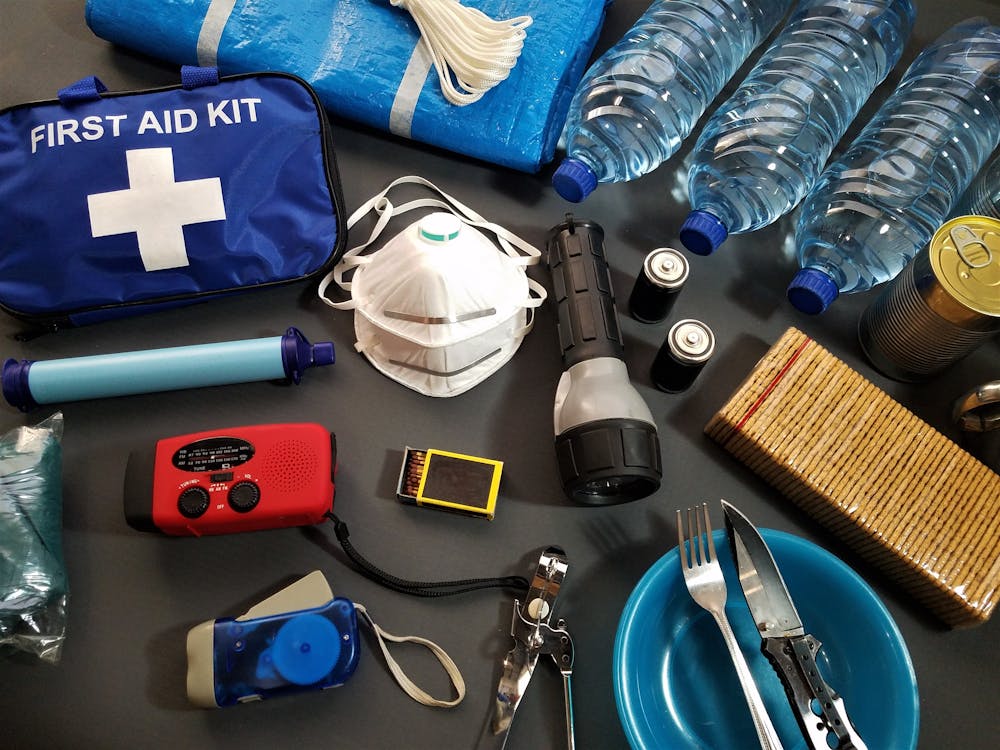
So So here’s how to do it cheap. Like, actually cheap. Not “budget-friendly” where budget means $500. I mean under a hundred dollars, starting from zero, buying things at places normal people actually shop.
Honestly? That initial setup — the stuff I bought for under a hundred bucks at Walmart and Dollar Tree and one very sketchy Army surplus store on Route 19 — that setup carried me through three more hurricane seasons and a week-long power outage in 2014. Not comfortably. But alive and okay.
Here’s the list. Every dollar accounted for.
Water First. Always Water First.
I know. Everybody says this. It’s boring. You want to skip ahead to knives and fire starters and cool tactical stuff. I get it. But you can go three weeks without food. You’ll be miserable, but you’ll live. Without water, you’ve got maybe three days. Less in heat. And if you’re in Florida or Texas or Arizona, “heat” is most of the year.
Pick up two 7-gallon Aqua-Tainer jugs from Walmart. $11.97 each. So call it $24. That’s 14 gallons, which is one gallon per day per person for a week for two people, or two weeks if you’re solo and being careful.
Fill them from the tap. Right now. Today. Don’t buy bottled water cases — you’re paying for packaging. Your tap water is treated and safe and free. Put a piece of tape on the jug with the date you filled it and swap the water out every six months. Set a calendar reminder because you will forget otherwise. I forgot the first time. Opened a jug after eleven months and it smelled like a swimming pool and regret.
Sawyer Mini water filter. $19.95 at Walmart or Amazon. This little thing filters up to 100,000 gallons. Removes 99.99% of bacteria. Weighs two ounces. I’ve used mine for four years on backpacking trips and it still works perfectly. It’s the best twenty dollars you will ever spend on survival gear. I’d buy this before I’d buy food.
If you want a deep dive on water storage, I broke down all the best emergency water storage containers in a separate article.
Running total: $44.
Water Before Everything Else — Including Fancy Gear
You can survive three weeks without food but only three days without water — and less in summer heat. That’s why water storage and filtration should be your first $44, before any knife, flashlight, or food purchase. The Sawyer Mini at $20 is the highest value prep dollar you’ll spend: it filters 100,000 gallons and removes 99.99% of bacteria.
Food That Doesn’t Suck (Much)
You’re not building a gourmet pantry here. You’re building a “the grocery store is closed and won’t open for a week” pantry. Adjust your expectations accordingly.
Grab a 20-pound bag of white rice from Walmart. $8.94. That’s roughly 100 servings. White rice, not brown. Brown goes rancid. White rice stored in a cool dry place will outlast you. Literally. They’ve found edible rice in ancient storage vessels. Yours will be fine in the hall closet.
Twelve cans of beans. Mix it up — black beans, pinto, kidney. About $0.78 each at Walmart. Call it $9.50. Beans plus rice is a complete protein. It’s what most of the planet eats for a reason.
Six cans of chicken or tuna. About $1.50 each. That’s $9. Protein variety so you don’t lose your mind eating beans and rice for every meal. My wife drew the line at day three of beans and rice during a practice weekend and I don’t blame her.
Jar of peanut butter. The big one. $4.48 at Walmart. 2,600 calories in a single jar. No cooking required. Eat it with a spoon from the jar at 2 AM during a blackout. No judgment.
Couple boxes of granola bars. Like $5 total. Grab-and-go calories. Stuff them in your go-bag, your car, your work desk.
Instant oatmeal variety pack. $4. Boil water, add packet, eat. If you can’t boil water, add cold water, wait five minutes, eat. It’s mushier. It’s not great. But it’s 150 calories and it’s something.
Food total: $41. Running total: $85.
Now. Eighty-five bucks and I haven’t mentioned a knife, a first aid kit, or a flashlight. Fair point. But here’s why I did it this way — water and food keep you alive. A cool knife does not keep you alive. Priorities.
The Last Fifteen Bucks
This is where you get creative. You have $15 left and you need light, fire, and first aid. The good news is that Dollar Tree, dollar stores, and your own house already have most of what you need.
For light, pick up a headlamp from Walmart. The Ozark Trail brand runs about $5 and they’re honestly not terrible. Not as good as a $40 Black Diamond, but they work — enough light to navigate your apartment during a blackout, find what you need, and not trip over the cat. Batteries included usually. If not, add $3 for a pack of AAAs.
I cannot overstate how much better a headlamp is than a flashlight. Hands free. Both hands free. For cooking, for first aid, for carrying things. I will die on this hill.
For fire, just grab a pack of BIC lighters — three for $3 at any gas station on the planet. I know, I know. Ferrocerium rods, waterproof matches, magnesium strikers — all great options eventually. But for under a hundred bucks, nothing beats a BIC. Works in rain, in wind, one-handed, every single time. I carry one everywhere: car, go-bag, kitchen drawer, jacket pocket.
And if you want to learn actual fire craft beyond clicking a Bic — and you should eventually — I wrote up all the methods for starting fire without matches that actually work in the real world.
For first aid, start at the dollar store. Seriously. Dollar Tree: a roll of gauze ($1.25), a box of adhesive bandages ($1.25), a small tube of antibiotic ointment ($1.25), a roll of medical tape ($1.25). That’s $5 and it handles 90% of what goes wrong — cuts, scrapes, blisters, minor burns.
Is this a complete first aid kit? Not even close. But it handles the stuff that actually happens. Most emergencies don’t involve gunshot wounds and compound fractures. They involve someone cutting their hand on a can lid at 11 PM with no urgent care open. Ask me how I know. Actually, ask my wife. She’s got the scar.
Remaining total: approximately $13 for these items. Grand total: $98.
Two bucks left over. Buy yourself a gas station coffee. You earned it.
A Headlamp Beats a Flashlight Every Time
For $5 at Walmart, an Ozark Trail headlamp keeps both hands free — which matters when you’re cooking on a camp stove in the dark, carrying supplies, or providing first aid. A flashlight held in your mouth or between your knees is a distant second. If your emergency budget only allows one light source, make it a headlamp.
The Stuff You Already Have (And Don’t Realize)
Here’s what kills me about those $2,000 prepper starter lists. Half the stuff they tell you to buy, you already own.
Kitchen knives. You have kitchen knives. A decent chef’s knife from your drawer is a perfectly functional survival tool. You don’t need a $200 fixed-blade bushcraft knife to open cans and cut cordage. My $12 Walmart kitchen knife has processed game, cut rope, and opened more cans than any of my “real” knives.
Blankets and sleeping bags. Check your closet. That old sleeping bag from college? That’s a survival tool. Extra blankets? Survival tools. In a winter power outage, pile every blanket you own on the bed, wear your winter coat inside, and you’ll be fine. I did this during a freak cold snap in Tampa in 2018 — pipes burst across the city, power went out, it was 28 degrees outside. I wore a hoodie, a jacket, wool socks, and buried myself under four blankets. Uncomfortable? Yes. Survivable? Absolutely.
Garbage bags. Heavy duty 55-gallon bags are waterproofing, rain ponchos (cut head and arm holes), ground cloths, water collection, waste disposal. I keep a roll in every kit I own. A box of ten costs about $4 and you probably already have one under your sink.
Your car. If you own a car, you have a mobile shelter with a heater. During one hurricane evacuation, I slept in my truck for two nights in a Walmart parking lot in Ocala. Reclined the seat, ran the engine for ten minutes every couple hours for heat and charging, and was honestly more comfortable than some people in the official shelters. Keep your gas tank at least half full. Always.
Where to Go From Here (Without Going Broke)
So you’ve spent your $98. You’ve got two weeks of water, a week of food, basic lighting, fire capability, and first aid. You’re ahead of most people. Genuinely. FEMA says only about 48% of Americans have supplies set aside for a disaster. You just joined the prepared half.
Now. Every month, add $20 to your preps. That’s it. Twenty bucks.
Second month: Better first aid kit. A premade Adventure Medical Kits Ultralight .7 runs about $18 and has everything the Dollar Tree kit doesn’t — SAM splint, trauma pad, wound closure strips, moleskin.
Third month: A fixed-blade knife. Morakniv Companion. $15 at Amazon. The Mora is what every bushcraft instructor I’ve ever met carries as a backup. It’s carbon steel, takes a wicked edge, and costs less than lunch. I’ve batoned firewood with mine, processed two deer, and carved tent stakes. Fifteen dollars.
Fourth month: Better food. A 5-gallon bucket with a gamma seal lid ($14 total) to properly store that rice. Some canned meats, maybe a few pouches of freeze-dried stuff if it’s on sale.
Fifth month: Communication. A Baofeng UV-5R radio. About $25. Controversial in prepper circles because it’s cheap Chinese electronics and you need a ham license to transmit. But for receiving emergency broadcasts, weather alerts, and monitoring local traffic during a crisis? Unbeatable for the price. I’ve got three of them.
Sixth month: Documents. Waterproof copies of your IDs, insurance cards, medical info, emergency contacts. A small fireproof document bag costs about $15. Not exciting. But when your apartment floods and all your paperwork turns to mush, you’ll be glad you did it. My buddy’s house flooded in 2016 and he spent FOUR MONTHS getting replacement documents. Four months.
$20 a Month Gets You Fully Prepared in Six Months
After the initial $98 foundation, adding $20 a month covers the gaps systematically: month two is a real first aid kit, month three is a quality knife, month four is proper food storage, month five is emergency communication, month six is document protection. Six months from now you have a complete emergency setup for under $220 total.
The Mental Part Nobody Talks About
I’m going to say something that most prepper content won’t say.
The gear is maybe 30% of it.
The other 70% is knowing what you’d actually do. Where would you go if you had to leave? Do you know the route? Have you driven it? Does your family know the plan? Do you have a meetup point if cell phones go down?
I didn’t think about any of this until my wife asked me during Hurricane Michael prep in 2018. She said, “So where are we actually going?” And I stood there. Just stood there. Mouth open. The guy with the water jugs and the first aid kit and the rice buckets — I had no answer. We hadn’t talked about it. Not once.
That conversation — sitting at the kitchen table with a paper map (paper, because phones die) and actually marking routes and meetup points and writing down phone numbers we normally only have saved in our contacts — that was worth more than everything in every kit I own.
Check out our emergency communication plan guide if you haven’t figured that part out yet. It’s free. It doesn’t cost any of your $100.
Quick Reference — The $98 Shopping List
I’m putting this at the end because if I put it at the top, you’d buy the stuff and skip the article and miss the context. And the context matters.
- 2x Aqua-Tainer 7-gallon jugs — $24
- 1x Sawyer Mini water filter — $20
- 20 lbs white rice — $9
- 12 cans beans — $10
- 6 cans chicken/tuna — $9
- 1 jar peanut butter — $4.50
- 2 boxes granola bars — $5
- 1 box instant oatmeal — $4
- 1x Ozark Trail headlamp — $5
- 3x BIC lighters — $3
- Dollar store first aid supplies — $5
Total: approximately $98
That’s your floor. Not your ceiling. Build from here. Twenty bucks a month. In a year, you’ll have a setup that handles most of what life throws at you.
But this weekend? Start with the water. Just the water. Two jugs, twenty-four bucks, fifteen minutes to fill them from the kitchen sink.
Then take the bug out bag essentials quiz and see what else you might be missing. Some of the answers might surprise you.
For the complete picture on getting prepared without breaking the bank, read our complete guide to emergency preparedness — it covers everything from planning to skills to supplies, and a lot of it costs nothing.