This article contains affiliate links. We may earn a small commission if you purchase through these links, at no extra cost to you.
I thought I had a solid emergency food supply until the blizzard actually hit. Power was out, roads were closed, and I was working through a real emergency — not a hypothetical one. Within two days I realized my pantry had a serious problem: plenty of food by volume, but not nearly enough usable calories. Half of what I had stored needed cooking fuel I was conserving. Another quarter was comfort food with almost no nutritional value. I had made every classic mistake in the book without ever realizing it.
Here are the six food storage mistakes that silently undermine your survival calorie planning — and how to fix each one before a crisis reveals them.
Mistake 1 — Stocking Calories Without Checking Caloric Density Per Pound
Raw calorie count feels like the right metric. It is not enough on its own. Caloric density — calories per pound of stored food — is what determines how much physical space and weight your supply requires.
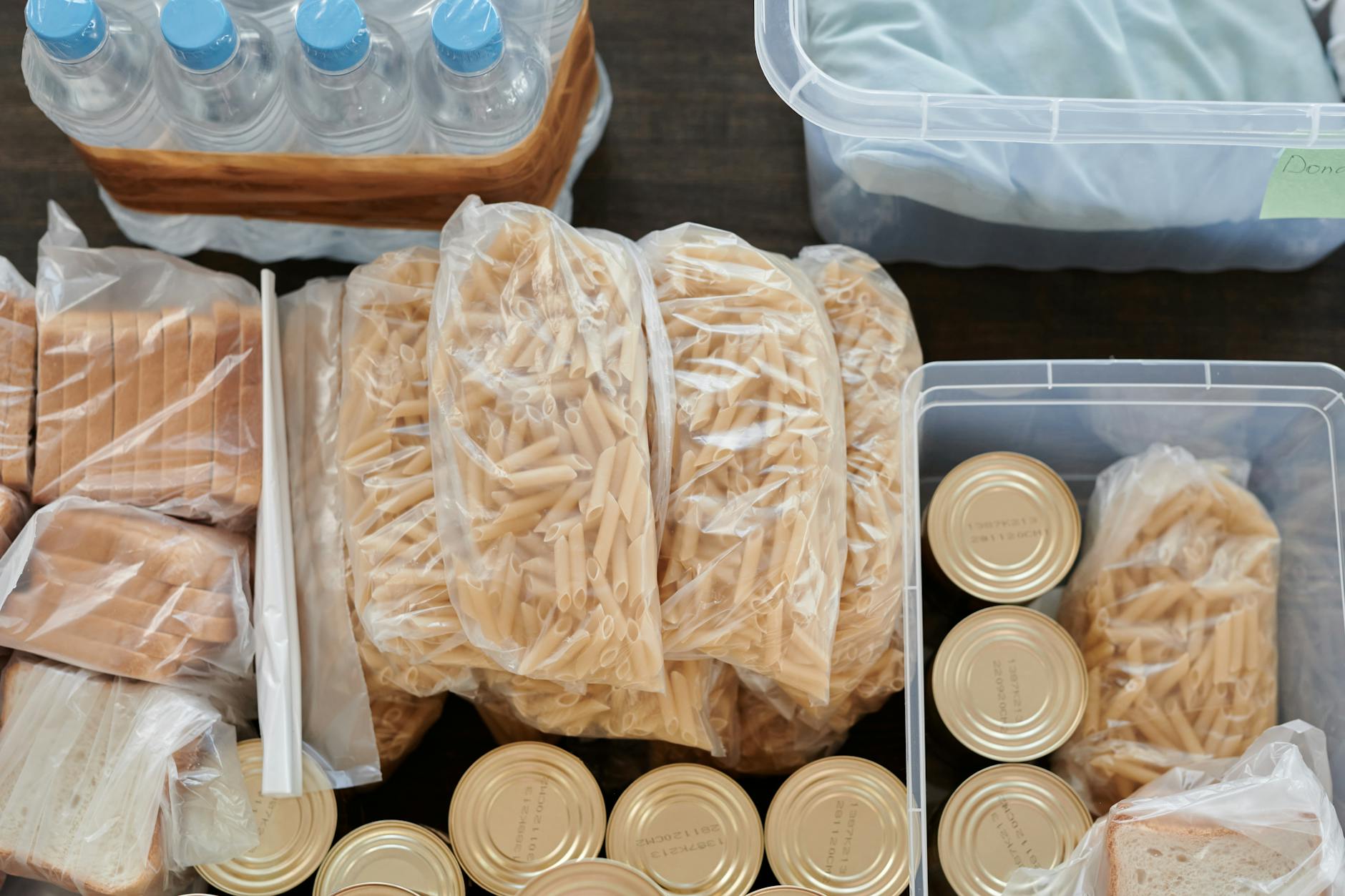
Pasta has around 1,600 calories per pound. White rice is similar at 1,600. Peanut butter hits 2,800 per pound. Almonds deliver 2,600. Cooking oil is the champion at 3,500 calories per pound. If your storage is mostly bulky, low-density items, you will run out of space (and possibly shelf stability) long before you hit your caloric target.
Use the Survival Calorie Calculator to calculate your total caloric need, then reverse-engineer your shopping list based on density. Aim for an average of at least 1,500 calories per pound across your full inventory.
Mistake 2 — Ignoring Macronutrient Balance
A pantry full of rice, pasta, and crackers can technically hit a caloric target. But carbohydrates alone do not sustain physical performance or muscle mass. Without adequate protein and fat, your body starts catabolizing muscle tissue to meet its protein needs — bad news in any scenario where physical capacity matters.
Target roughly 25-30% of calories from protein, 30-40% from fat, and the remainder from carbohydrates. Canned tuna, salmon, chicken, and beans cover protein. Peanut butter, nuts, olive oil, and coconut oil cover fat. This does not have to be precise, but the ratio needs to be in the ballpark or you will feel the deficit within days.
Mistake 3 — Not Accounting for Cooking Fuel
This one surprises people. Boiling water for rice, pasta, or freeze-dried meals requires fuel — propane, butane, alcohol, wood. Every cooking session burns a finite resource. In an extended emergency, running out of cooking fuel can render a large portion of your food supply inedible.
Plan around no-cook or minimal-cook options for at least a portion of your diet: canned fish, peanut butter, crackers, nuts, ready-to-eat canned soups. And calculate how many meals your fuel supply can actually support before assuming everything in your pantry is accessible.
Mistake 4 — Buying Comfort Food With No Nutritional Density
Candy, chips, and sugary snacks show up in a lot of emergency kits because they are familiar and feel good psychologically during stress. There is a small argument for morale foods. There is no argument for letting them crowd out nutritionally dense staples.
200 calories from a handful of gummy bears delivers nothing to your body beyond a brief blood sugar spike. 200 calories from a handful of almonds delivers protein, healthy fat, magnesium, and sustained energy. The shelf space is identical. The nutritional outcome is not.
Pro Tip
Create a simple spreadsheet that lists every item in your food storage with its weight, total calories, and expiration date. This lets you instantly calculate your actual caloric inventory and spot gaps. The Survival Calorie Calculator can tell you your daily target — your inventory spreadsheet tells you how many days you can actually cover.
Mistake 5 — Underestimating Calorie Needs for Active Scenarios
This is the most common planning error. People calculate food storage based on roughly 2,000 calories per day because that is what they associate with normal eating. But a survival scenario involving physical labor, hiking, or cold exposure can push daily burn rates to 3,500 to 5,000 calories.
If your storage is sized for 2,000 calories per day but the scenario demands 3,500, your “90-day supply” becomes a 51-day supply — and it runs out in the middle of a crisis, not at the end of one. Size your storage to realistic demand, not sedentary baselines.
Mistake 6 — Not Rotating Food and Losing Shelf Life
Stored food that expires before you use it is money wasted and calories lost. This is a systemic problem, not a one-time mistake — it happens every time you build a supply and then ignore it for two years.
Implement a first-in, first-out rotation system. New purchases go to the back; older stock comes to the front for regular consumption. Review expiration dates every 6 months. For guidance on maximizing shelf life and rotation schedules across different food types, the How to Store Food for One Year guide covers storage conditions and practical rotation systems that actually get used.
Avoiding these six mistakes costs nothing except attention and planning time. But each one left unaddressed quietly erodes your actual preparedness level until a real emergency reveals exactly how far the gap has grown.