This article contains affiliate links. We may earn a small commission if you purchase through these links, at no extra cost to you.
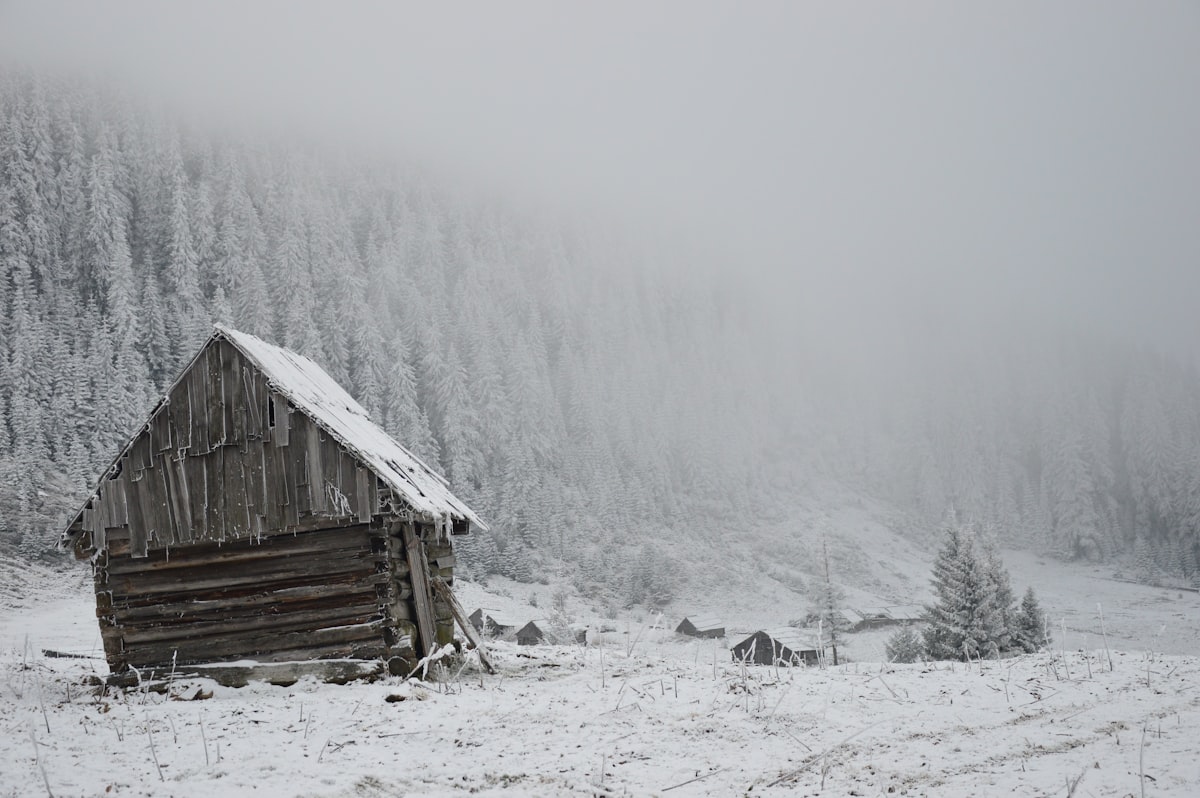
My youngest was with me on a three-day trip in the Absaroka-Beartooth Wilderness in Montana. Day two we got turned around in a whiteout coming off a ridge — visibility dropped to maybe 15 feet, temperature fell fast, and we had genuinely no idea which drainage we were in. We weren’t panicking. But I was making fast decisions about whether we needed outside help.
We didn’t need it that time. We found a creek, followed it down, stumbled into a recognizable trail around dusk. Fine. But I ran through my signaling options in my head the whole time, and I realized I was less prepared on that front than I should have been.
Two months later I spent the better part of a fall weekend specifically practicing signaling techniques. I’m sharing what I learned.
Table of Contents
- The Rule of Three for Signals
- Signal Mirrors
- Whistles
- Fire and Smoke
- Ground-to-Air Signals
- Color and Contrast
- Electronic Devices
- What Rescuers Actually Look For
- Common Signaling Mistakes
The Rule of Three for Signals
Three is the universal distress number. Three shots. Three whistle blasts. Three fires in a triangle. Three of anything, with a pause, repeated. Search and rescue knows this pattern. Hunters know this pattern. Pilots know this pattern.
Don’t do two. Don’t do four. Three, pause, three again.
This convention exists because accidental signals happen constantly. A single shot can be a hunter. Two shots can be a target shooter. Three shots fired in close sequence with a pause triggers trained response in anyone who knows the outdoors. Same logic applies to whistles and fires.
Before I go into individual methods, the most important thing: start signaling early, not when you’re desperate. The mistake most people make is waiting until they’re completely lost and exhausted to start thinking about rescue. If you’re overdue, someone may already be looking. If you’re somewhere with good visibility, start signaling now. Don’t wait for the perfect moment.
For a foundational overview of navigation and staying found in the first place, our wilderness navigation guide is worth reading before any backcountry trip.
Signal Mirrors
The signal mirror is, I think, the most underrated survival tool in existence. A quality signal mirror can be seen from commercial aircraft at 10+ miles on a clear day. That’s not marketing hyperbole — that’s basic physics. Sunlight off a polished surface at the right angle is remarkably visible from altitude.
The Coghlan’s signal mirror runs about $8. It has a hole in the center. You aim through the hole until you see a bright spot on your target, then tilt until that spot lines up with where you want the light to go. Sounds simple. Takes a few practice sessions to get smooth.
The SOL Rescue Flash Signal Mirror is the one I carry. About $10, floats, has a retroreflective aiming aid that makes technique easier in a stressed situation. Worth the extra two bucks over a basic chrome mirror.
The Technique
Hold the mirror about six inches from your face. Look through the center hole. You’ll see a reflected spot on your face or hand. Tilt the mirror until the reflected spot moves toward your target. When the bright flash hits your target, you’ve got it. Sweep slowly side to side once you’re on target — the sweeping motion catches attention better than a stationary reflection.
Clouds work too. If no aircraft is visible, flash toward any cloud layer. The light can diffuse through clouds and still be detectable from above. Try a slow horizon-to-horizon sweep every few minutes.
No signal mirror? A CD, the inside of a granola bar wrapper, a polished belt buckle, a phone screen — all reflective surfaces work to some degree. Less effective than a purpose-built mirror but not nothing.
Pro Tip: Practice your signal mirror technique at home first. Point it at a car parked down the street. You’ll know you’re doing it right when you can flash the flash on command. If you can’t reliably aim the thing in a backyard, you can’t reliably aim it during a rescue attempt.
A Signal Mirror Weighs Less Than a Quarter and Reaches Miles
The SOL Rescue Flash Signal Mirror weighs 0.6 ounces and costs about $10. It can signal aircraft at over 10 miles in clear conditions — a range no whistle or shouting can match. It belongs in every pack, every day hike kit, and every vehicle emergency bag. There is almost no piece of survival gear with a better weight-to-reach ratio.
Whistles
A whistle carries farther and requires less energy than screaming. A lot less energy. You can whistle for hours; you cannot scream for hours.
The standard is three blasts, pause, repeat. But there’s important technique here that most people ignore:
One thing most people never think about: sound doesn’t travel equally in all directions off most whistles. I learned this the first time I actually tested mine in open terrain — the projection was noticeably stronger in certain directions than others. So rotate 90 degrees between sets of blasts. Work your way around all four compass points over time so you’re not just broadcasting one way and hoping rescuers happen to be there.
Pause between sets and listen. Rescuers call back. If you’re blowing continuously you might be drowning out the response.
The Fox 40 Classic pealess whistle is the industry standard in search and rescue. No moving parts to freeze, no pea to ice up, loud as hell — I’ve clocked mine at over 115 decibels. About $6. I keep one on every pack zipper and every PFD. They weigh nothing.
The tiny keychain whistles that come on some survival kits are nearly worthless by comparison. I tested one against a Fox 40 across a small canyon. The Fox 40 echoed back clearly. The keychain whistle was barely audible at 200 feet in moderate wind.
Novelty Keychain Whistles Are Not Rescue Whistles
The small whistle attached to many survival kits and keychains is not a rescue-grade signaling tool. In field testing against a Fox 40, a typical keychain whistle became inaudible at 200 feet in moderate wind — the Fox 40 carried clearly across a canyon at several times that distance. A real rescue whistle costs $6 and weighs half an ounce. Don’t trust your life to a keychain trinket.
Fire and Smoke
Three fires in a triangle — roughly 100 feet apart — is the international ground distress signal. Visible from aircraft during the day and from a long distance at night.
The reality is that building three fires isn’t always practical. One well-built signal fire is usually more useful than three mediocre ones.
Smoke is your signal during the day. Flames are your signal at night.
For daytime signaling, you want smoke that contrasts with the background. Rubber, plastic, oil rags, green vegetation — these produce dark, oily smoke that’s visible against sky and snow. Don’t burn just dry wood; you want visible color contrast.
In snow or winter terrain, produce dark smoke. Against a snow field, dark smoke is dramatically visible from aircraft. I’ve seen photos from search and rescue helicopter pilots — they describe dark smoke in snow terrain as almost shockingly easy to spot.
Green vegetation piled on a fire produces white/gray smoke. That’s visible against dark terrain and tree canopy.
Pro Tip: Build your signal fire before you need it. Collect your materials, pre-build the structure, and keep it dry under a tarp or rain gear. The worst time to figure out fire signaling is when you’re exhausted, cold, and need rescue right now.
Ground-to-Air Signals
If you have time and open ground — a meadow, a beach, a cleared area above treeline — a large ground signal can be seen from aircraft at altitude even without electronics.
The universal symbols:
- X = require medical assistance
- → = traveling in this direction
- V = require help
- N = no / negative
- Y = yes / affirmative
- LL = all well, don’t need help
Make these as large as possible. 10-foot letters look tiny from 1,000 feet. A typical aircraft checking from search altitude needs letters 15-20 feet tall minimum to read clearly. Use anything available: contrasting rocks, logs, your gear, stomped patterns in snow, trenches in sand.
Snow is the best medium for ground signals. Stamp a large X deep enough to shadow clearly. Ideal contrast. Easy to read from altitude. I’ve seen rescue photos where ground signals in snow were readable at search altitude — but only because they were big. Small signals in snow get lost in terrain shadows.
After making any ground signal, put something bright and colorful at its center if you can. An orange rain jacket, a space blanket, anything that adds color contrast. Color reads better than shape from distance.
Color and Contrast
Rescue teams scan for anomalies. Anything that doesn’t fit the natural pattern of the terrain catches the eye.
Blaze orange, safety yellow, hot pink — these colors don’t exist in nature. Spread them out. Don’t keep your brightly colored gear stuffed in a pack. Lay a space blanket silver-side-up in a clearing. Hang your orange rain jacket from the highest branch visible from above.
The emergency space blanket in your kit is doing double duty here. Its silver mylar surface reflects light and visible from altitude. It’s also visible on radar in some conditions (the metallic coating). Lay it flat in the most exposed position you can find.
At night, a headlamp pointed skyward isn’t much of a signal — the beam disperses quickly. A fire is far better. But if you hear an aircraft at night, a headlamp aimed directly toward the sound and flashed three times is worth doing. Can’t hurt.
Electronic Devices
Personal locator beacons, satellite messengers, cell phones, emergency radio — these are your best tools by a wide margin and nothing else comes close.
A Garmin inReach Mini satellite communicator costs about $350 plus a subscription ($15/month for basic). It sends GPS coordinates directly to rescue services through the Iridium satellite network. No cell coverage required. Press the SOS button and rescuers have your exact location within seconds.
This is not optional equipment for serious backcountry use. My opinion. I know it’s more money. I also know three people who’ve triggered PLBs or satellite messengers and gotten out of situations that could have been much worse. Worth it.
If you have cell coverage, your phone’s GPS location can be shared with 911. Most 911 systems in the U.S. now accept GPS coordinates from cell calls. State your location slowly and clearly if you get a connection — even a 30-second call can be enough to transmit your GPS.
Emergency satellite phones are an option for extended expeditions. Overkill for a weekend trip. Reasonable for a two-week remote wilderness adventure.
What Rescuers Actually Look For
I talked at length with a search and rescue volunteer from Gallatin County, Montana, after that 2019 trip. He spent 14 years on a SAR team. Here’s what he said they look for when searching from aircraft:
Movement is the biggest thing. Stationary objects blend in fast. A person waving something bright is dramatically easier to spot than a person standing still. Wave both arms overhead — the asymmetry catches the eye.
Smoke, even faint smoke, gets investigated. Fire means human. They check.
Shiny surfaces at the wrong angle — signal mirrors, metallic space blankets, wet rain gear catching sun — get second looks.
Color anomalies. Anything that doesn’t match the terrain.
Patterns that repeat at intervals — three whistles, three flashes, three fires. Searchers train to recognize the rule-of-three pattern.
He also said: stay in place. Moving targets are dramatically harder to find than stationary ones. If you have a shelter and food and water and can signal from where you are, stay put. The hardest rescues are the ones where the subject kept moving and the rescuers kept arriving at where the person was.
Common Signaling Mistakes
Mistake 1: Not practicing before you need it. Signal mirror technique, fire building, ground-to-air signal construction — all of these degrade under stress unless they’ve been practiced. Spend a Saturday in your backyard. It’s an hour of your life that might matter.
Mistake 2: Signaling only when you see/hear aircraft. Most rescues that involve signaling happen over multiple days. Signal on a schedule. Three whistle blasts every 20 minutes. Mirror sweeps toward likely aircraft corridors at dawn and dusk. Don’t wait for something to signal to — maintain a signaling routine even when no one seems to be listening.
Mistake 3: Keeping gear packed away. Your signal mirror does nothing in the bottom of your pack. Your space blanket adds zero visibility folded inside your kit. Set your visible gear up when you stop moving. Make your campsite as visible as possible. Bright colors out. Shiny surfaces positioned to catch sun.
Mistake 4: Starting with low-energy signals. If you’re genuinely in distress, prioritize signals in order of reach: satellite/electronic first, then fire and smoke, then mirror, then whistle, then visual patterns. Most people start with whistling because it feels active. Whistles are useful but they have a range measured in hundreds of feet to maybe a mile in ideal conditions. A signal mirror reaches miles. Fire reaches further. Start with what has the greatest range.
Mistake 5: Not signaling early enough. If your situation is deteriorating — temperature dropping, injury worsening, water running out — signal now. Before you’re too weak to maintain a fire. Before your phone battery is dead. Before conditions make signaling impossible. Early rescue beats late rescue by a wide margin.
The short version of everything above: carry a Fox 40 whistle and a signal mirror as baseline kit. Add a satellite communicator for anything serious. Know how to build a signal fire before you need one. Start signaling earlier than feels necessary.
And if you’re still working on your navigation fundamentals, take our wilderness survival basics quiz — knowing how not to need rescue is still the best plan.