This article contains affiliate links. We may earn a small commission if you purchase through these links, at no extra cost to you.
I was sitting at my desk when a severe storm warning hit the local alert system. I grabbed my emergency kit and started sorting through it — and that is when I realized how many gaps I had. No backup phone charger. Only two days of food. No copies of our insurance documents. And the flashlight batteries were dead. The storm turned out to be minor. But standing there with a half-prepared kit, I understood how badly things could go if it had not been.
Building a real emergency kit is not about buying a pre-packaged box from a big-box store and checking the box. It is about knowing what you actually need, in the right quantities, for your specific household. Use the Emergency Kit Estimator to generate your personalized list — then use this breakdown to understand what goes in each category and why.
Water
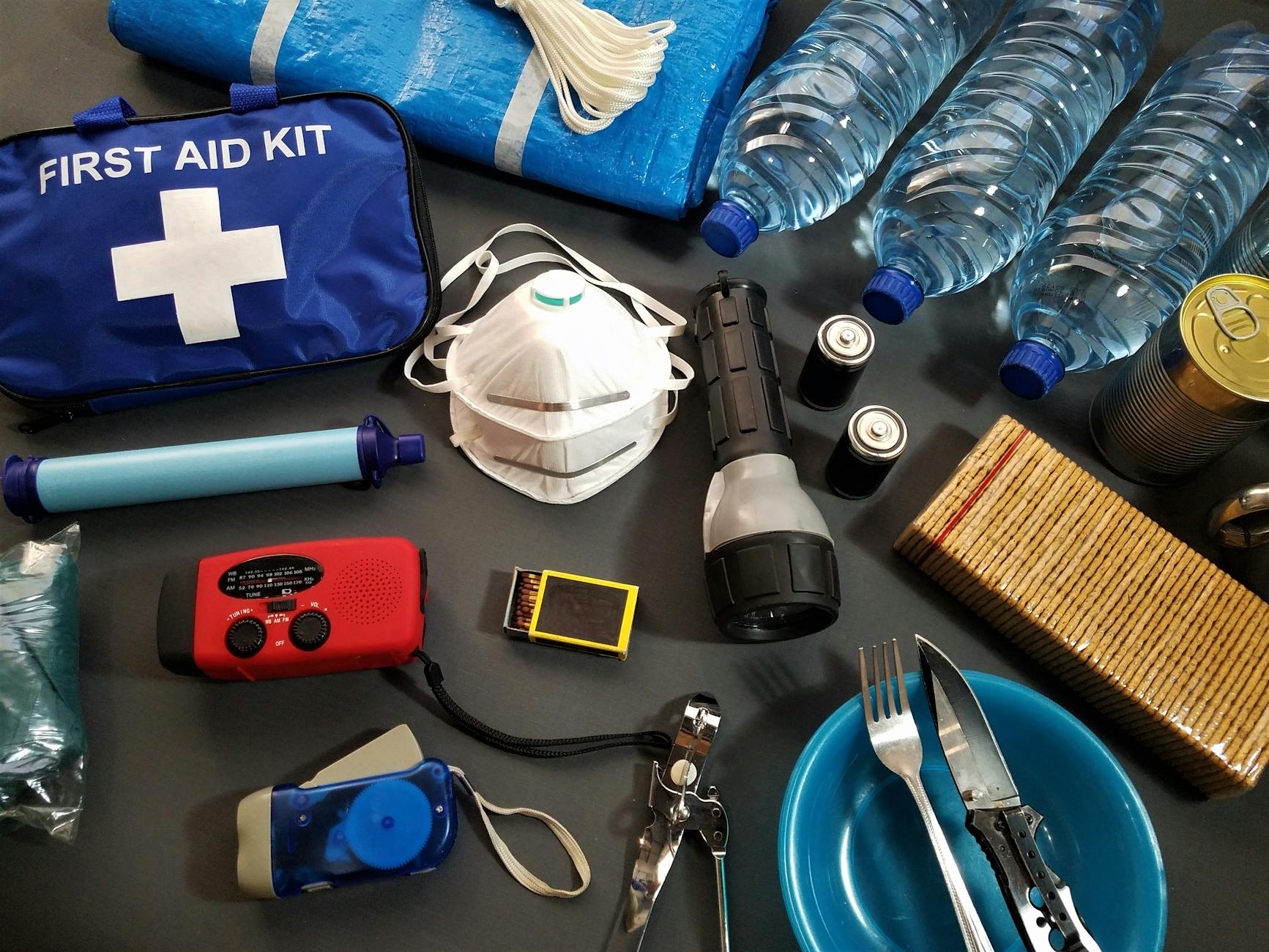
Water comes first. The rule of thumb is 1 gallon per person per day for drinking and cooking. The smarter target is 2 gallons per day per person to also cover basic hygiene. For a household of three preparing a two-week supply, that means 84 gallons minimum. Store in food-grade HDPE containers or stackable 7-gallon jugs. Include a water filter (LifeStraw or Sawyer Squeeze) as a backup — it weighs almost nothing and could save you if your stored supply is exhausted.
Food
Non-perishable, calorie-dense food is the goal. Good options include canned proteins (tuna, chicken, beans), peanut butter, whole-grain crackers, dried fruit, and freeze-dried meals. Aim for at least 2,000 calories per adult per day across your supply period. Three days is FEMA’s minimum recommendation. Two weeks is a more realistic buffer for most regional disasters. Factor in anyone with dietary restrictions — gluten-free, dairy-free, infant formula — before you finalize your list.
First Aid
Your first aid kit needs to go beyond the standard plastic box of bandages. At minimum it should include: adhesive bandages in multiple sizes, sterile gauze pads and rolled gauze, medical tape, antiseptic wipes, antibiotic ointment, elastic bandage wrap, nitrile gloves (several pairs), scissors, tweezers, a CPR face shield, and a first aid manual. If anyone in your household has specific medical conditions, their needs should drive additional inclusions.
Documents
Keep copies of the following in a waterproof, fireproof pouch: government IDs (driver’s licenses, passports), birth certificates, Social Security cards, insurance policies (home, health, auto), bank account numbers and contact information, medical records and prescription information, and emergency contact lists. Store digital backups on an encrypted USB drive as well. Losing these documents during a disaster adds weeks or months of administrative burden to an already difficult situation.
Tools and Light
A battery-powered or hand-crank flashlight per person is a minimum. Add a battery-powered or hand-crank radio for emergency broadcasts. Pack extra batteries in sizes AA and AAA. A multi-tool (Leatherman or similar) covers an enormous range of tasks. Include waterproof matches or a lighter, duct tape, a utility knife, and a manual can opener — that last one is embarrassingly often missing from kits that include plenty of canned food.
Communication
Fully charged power banks for phones should be in every kit. At least one should be solar-capable for extended outages. A NOAA weather radio is essential for receiving emergency broadcasts when cell networks are down. If your household is in a high-risk area for prolonged emergencies, a pair of GMRS walkie-talkies lets you communicate when cell towers are overwhelmed.
Pro Tip
Check your emergency kit every six months — set a recurring calendar reminder. Replace expired food and medications, swap out old batteries, and re-evaluate quantities if your household has changed. An outdated kit can create false confidence that leaves you underprepared when it counts.
Medications
Keep at least a 7-day supply of all prescription medications. Include common over-the-counter supplies: pain relievers (ibuprofen and acetaminophen), antihistamines, anti-diarrheal medication, antacids, and any specialized medications relevant to your household. Store medications in their original labeled containers in a temperature-stable location.
Hygiene and Sanitation
Sanitation is often underweighted in emergency prep but matters enormously for health. Include: hand sanitizer, antibacterial soap, moist towelettes, toilet paper, feminine hygiene products, garbage bags with ties (for makeshift toilet use if needed), and basic dental hygiene supplies. A roll of heavy-duty garbage bags is one of the most versatile items in any emergency kit.
Special Needs Items
Every household is different. Infant formula and diapers for babies. Pet food and water for animals. Extra eyeglasses or contact solution. Hearing aid batteries. Mobility aids. Entertainment and comfort items for children. A printed list of medications and dosages for anyone with complex medical needs. The Emergency Kit Estimator accounts for these variables when you fill out your household profile.
Building Your Kit Over Time
For broader guidance on household emergency planning beyond the kit itself, the Complete Emergency Preparedness Guide covers evacuation planning, communication protocols, and financial preparedness. If you commute or travel by car, the Vehicle Emergency Kit Checklist covers what should always ride with you.
No kit is perfect on the first pass. Build it to your best current knowledge, then refine it after each review. The goal is not perfection — it is being meaningfully better prepared than you would be otherwise.