This article contains affiliate links. We may earn a small commission if you purchase through these links, at no extra cost to you.
I remember the day I realized my water storage was not nearly as solid as I thought. A bad storm had knocked out the municipal supply for three days. I went to the garage to pull from my reserve and found two of my five containers had leaked. The remaining water smelled faintly of plastic and had been sitting since I filled it — sometime in the previous year, maybe longer. I had labeled nothing. I knew nothing.
Water can make or break your survival during any emergency. Storing it seems simple enough: fill containers, put them somewhere. But there are common mistakes that quietly undermine even the best-intentioned prep. Here are seven errors worth understanding — and fixing — before a crisis hits.
Mistake 1 — Using the Wrong Container Types
Not every plastic container is safe for long-term water storage. Soda bottles, milk jugs, and thin-walled juice containers can leach chemicals into water over time, especially in warm conditions. They also degrade and crack, creating slow leaks you might not notice until your supply is gone.
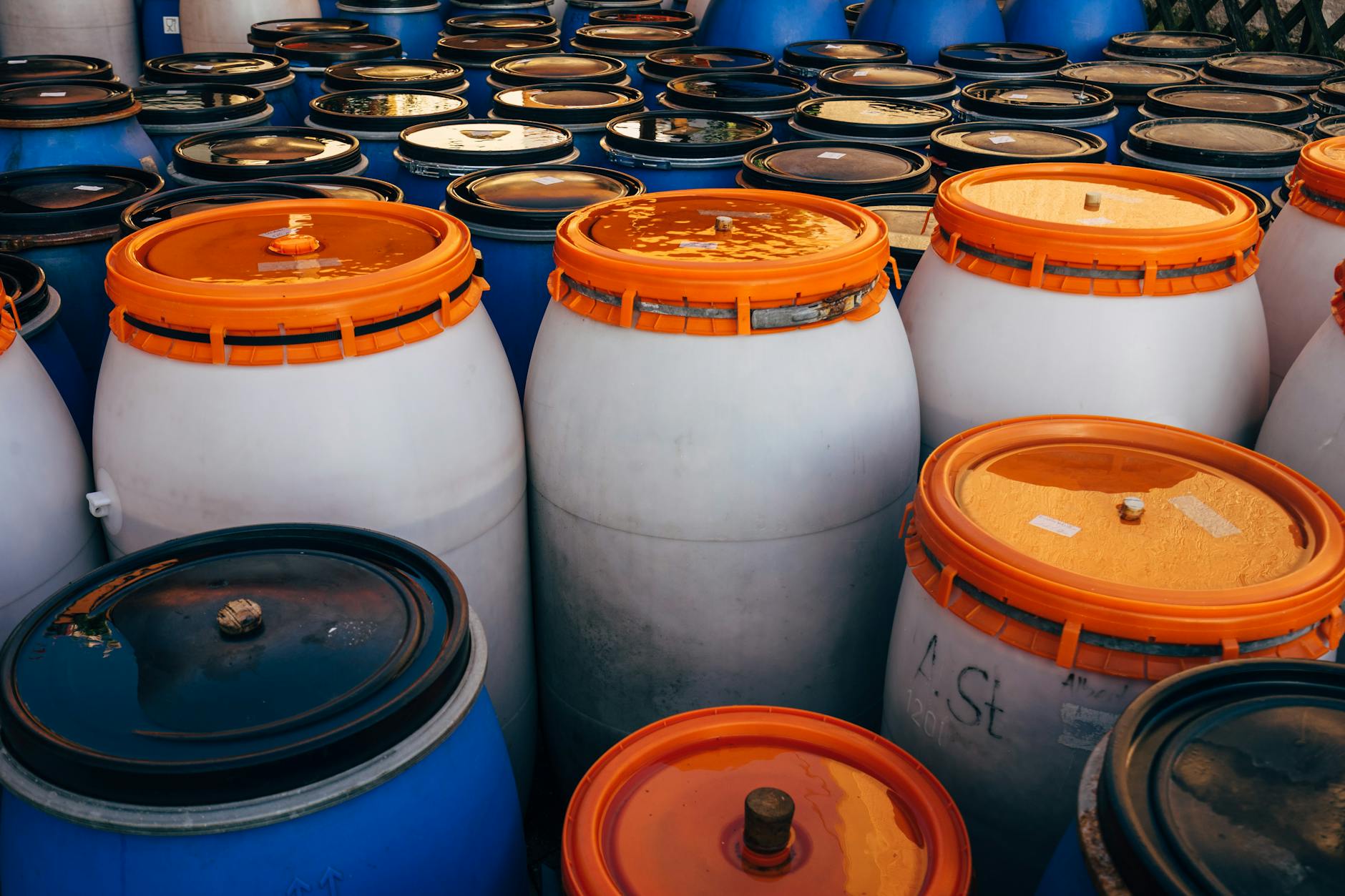
The right choice is food-grade HDPE (High-Density Polyethylene) containers — look for the recycling symbol with a “2” inside — or dedicated water storage barrels made from BPA-free materials. Glass works too but is impractical at scale. Avoid anything that was previously used for non-food substances. A container that once held bleach is contaminated even after rinsing.
Mistake 2 — Never Rotating Your Supply
Stored water does not last forever. Even sealed containers can develop off-tastes and odors from plastic off-gassing, and improperly sealed lids can let in bacteria over time. The standard recommendation is to rotate your supply every 6 to 12 months. That means dumping old water, cleaning containers, and refilling.
Use the Water Storage Calculator to figure out how many containers you’re managing, then set a calendar reminder for rotation. If you cannot remember when you last filled something, that water needs to go.
Mistake 3 — Storing Water Near Chemicals or in Direct Sunlight
Garages are a popular storage location — but they are also full of gasoline, motor oil, paint thinner, fertilizer, and pesticides. Plastic is permeable to vapors. Containers stored near strong chemicals can absorb those vapors into the water inside, even through sealed lids.
Sunlight degrades plastic and promotes algae growth in any container that is not completely opaque. Find a cool, dark spot — a basement, interior closet, or dedicated pantry shelf. The ideal temperature range is 50 to 70°F. Every degree warmer shortens your water’s usable life.
Mistake 4 — Forgetting About Your Pets
A medium-sized dog needs roughly 1 ounce of water per pound of body weight per day. A 50-pound dog needs more than 3 cups daily — almost half a gallon. Over a two-week emergency, that adds up to 7 gallons just for one dog.
Most people calculate water for the humans in their household and forget the animals entirely. Use the Water Storage Calculator and make sure you include pets. Their needs are real.
Mistake 5 — Underestimating Sanitation Water
People fixate on drinking water and overlook how much water basic sanitation takes. Handwashing after using the bathroom takes roughly a quarter gallon per event. Brushing teeth, cleaning dishes, and basic hygiene can add another 1 to 2 gallons per person per day.
If your toilet relies on municipal water pressure, add another 1.6 gallons per flush. Without adequate sanitation water, disease spreads fast in an emergency situation. Budget at least an extra gallon per person per day beyond your drinking allocation.
Important
Waterborne diseases like cholera, typhoid, and dysentery can kill within days. Never drink water that smells off, looks cloudy, or came from a container stored near chemicals or exposed to contamination. When in doubt, treat it or discard it.
Mistake 6 — No Purification Backup Plan
Even a well-stocked supply can run out or get contaminated. Every household should have at least one purification backup method ready to go. The options range from water purification tablets (sodium hypochlorite or iodine) to pump filters, gravity filters, and UV pen sterilizers.
Our guide on Emergency Water Purification Methods covers the full range of options with step-by-step instructions. Pick at least two methods and make sure you have the necessary supplies on hand. Filters need replacement cartridges; tablets have expiration dates.
Mistake 7 — Failing to Label Your Containers
This sounds trivial. It is not. During an actual emergency, you will not remember when you filled that blue barrel in the corner. You will not remember whether you treated it with water preserver drops or not. Stress degrades memory. Labels do not.
Write the fill date, the water source (tap, filtered, well), and any treatment used on every container. Masking tape and a permanent marker take ten seconds and could prevent a serious mistake three years from now.
Avoiding these seven mistakes costs almost nothing extra in time or money — but getting them wrong when it counts could mean the difference between a manageable situation and a dangerous one. Start with an accurate supply target, build the right foundation, and your water storage will actually work when you need it.