This article contains affiliate links. We may earn a small commission if you purchase through these links, at no extra cost to you.
Okay so I’m going to say something that’s going to offend literally every hardcore prepper on the internet: you do NOT need a 500-piece bug-out bag before you learn how to call for help.
I grew up in a family where survival was just… normal? Like, my dad was teaching us fire-starting when I was eight. I thought everyone knew how to filter water. Turns out — no. Most people have no idea. And that’s fine. But then I started watching people get into prepping and they immediately buy $1,200 worth of gear without knowing the first thing about why any of it matters.
That’s backwards. Here’s what actually happens when you start with gear instead of skills: you buy expensive stuff you don’t know how to use, it sits in a closet, and you have zero actual ability to handle an emergency. The gear becomes a security blanket that makes you feel prepared without you being prepared.
Our dad has a whole emergency preparedness guide that goes deep on all of this — and I’d read it eventually — but if you’re brand new, start here. This is the beginner version of that guide.
The First Rule Nobody Talks About
You want to know what survival skill #1 is? Not fire. Not water. Not navigation.
It’s calm under pressure.
I know, I know. That sounds like motivational poster garbage. But hear me out. My younger brother once knocked over a camp stove and lit a small patch of dry grass on fire. Panicked, ran around yelling, made it worse. My dad walked over, said “stomp it,” and it was out in ten seconds. Same situation. Completely different result because one person panicked and one didn’t.
You can learn every skill in this article. But if you freeze when something goes wrong — and something ALWAYS goes wrong — the skills don’t matter. So part of your training, genuinely, should just be practicing being calm. Breathe. Think. Act. In that order. Not act-then-panic-then-think.
Calm Under Pressure Is a Learnable Skill
Panic is the biggest survival threat most beginners face — not predators or disasters. You can train calm response by deliberately practicing small stressful tasks: start a fire when you’re cold and wet, navigate without your phone, cook a meal with only your emergency supplies. Each successful rep builds the pattern of think-then-act instead of freeze-then-panic.
The Actual Order to Learn Skills
People debate this constantly but the survival rule of three gives you a logical order:
- 3 minutes without air
- 3 hours without shelter in extreme weather
- 3 days without water
- 3 weeks without food
Food is last. Which means — stop stockpiling freeze-dried meals before you know how to build a fire. Food is the last thing that’ll kill you. Water is way more urgent, and shelter is more urgent than that in cold weather.
The practical beginner order I’d recommend:
- Water procurement and purification
- Shelter building and staying warm (or cool)
- Fire starting
- Navigation and signaling for rescue
- Basic first aid
- Food — foraging, hunting, fishing — this is genuinely advanced
Most YouTube prepper channels jump straight to #6 because it’s exciting. Traps! Snares! Bushcraft! Cool! But if you can’t purify water or stay warm overnight, none of that matters.
Skill 1: Water
You can go three days without water. That sounds like a lot until you’re actually dehydrated and making terrible decisions. Dehydration messes with your brain before you even feel thirsty. It’s sneaky.
Finding water in the field: Look for animal trails leading downhill — they usually go toward water. Low-lying areas, green vegetation, morning dew. Birds tend to fly toward water sources around dawn and dusk. These aren’t guarantees but they’re starting points.
Purifying water: This is the part people skip and they shouldn’t.
- Boiling: Bring water to a rolling boil for 1 minute (3 minutes above 6,500 feet elevation). That’s it. Kills everything biological. Simplest method.
- Filtration: A Sawyer Squeeze filter ($25-$35) removes bacteria and protozoa. Lightweight, reusable, actually works. I’ve used mine on three camping trips.
- Chemical treatment: Water purification tablets or Aquamira drops. Backup method. Good for emergencies because they’re tiny and weightless.
The mistake beginners make: using only one method. Boiling doesn’t remove heavy metals or chemicals. Filters don’t work on viruses (though viruses in US wilderness water are rare). Chemical treatment kills viruses. Layering methods is smarter.
For your house: store at least one gallon per person per day for three days minimum. Seven days is better. A standard water barrel or even clean plastic jugs work fine.
Pro Tip: Fill a couple of empty two-liter soda bottles with tap water and keep them in your basement or closet. They last 6-12 months. Not glamorous. Completely free. Start here before buying anything else.
No Single Water Purification Method Does Everything
Boiling kills pathogens but leaves chemicals. Filters remove bacteria and protozoa but miss most viruses. Chemical tablets kill viruses but don’t remove sediment. For real water security, layer two methods — boil or filter first, then treat with tablets if viral risk is a concern. In US backcountry, filter alone is usually sufficient; in international or urban emergency scenarios, add chemical treatment.
Skill 2: Shelter and Warmth
The wilderness scenario: you’re stuck outside in bad weather overnight. What kills people in that situation isn’t usually wild animals or dehydration. It’s hypothermia. Your body’s core temperature drops and your brain stops working clearly right when you need it most.
Basic shelter principles:
Insulation from the ground matters more than people realize. Cold ground pulls heat from your body way faster than cold air does. A pile of dry leaves between you and the earth does more than you’d think. Seriously — a 6-inch layer of debris under you is worth more than the same layer on top.
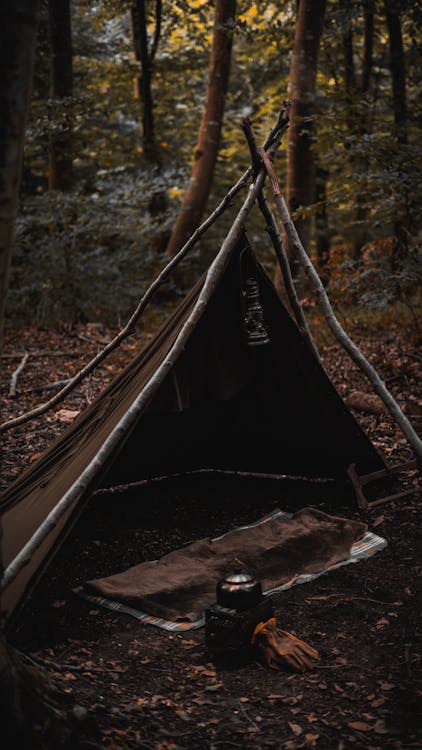
Lean-tos are the easiest structure to build. Find a downed log or prop a branch between two trees, then lean branches and debris against it at an angle. Cover with leaves, pine boughs, whatever’s available. You want a small space — easier to heat with body warmth.
The urban version: At home, know where your warmest room is. Interior rooms lose heat slower than rooms with exterior walls. Get some emergency mylar blankets ($5 for a pack of four) and keep them in a drawer. They look ridiculous but they work — they reflect up to 90% of body heat.
Know how to layer clothing properly too. Cotton is terrible for cold weather — it holds moisture and you lose heat 25 times faster when wet. Wool and synthetics are better. My dad has been saying this since I was five and I still show up to camp in a cotton hoodie sometimes. Do as I say, not as I do.
Skill 3: Fire
Okay, this is the fun one. Fire gives you warmth, purified water, cooked food, light, and a signal. It’s legitimately the most useful survival skill once you’re past water and shelter.
Start simple: Learn to build a fire with a lighter first. Seriously. Before you try primitive fire starting, understand the basics: tinder (catches a spark), kindling (small twigs), fuel (bigger wood). Build from smallest to largest. Don’t pack it tight — fire needs air.
Tinder that actually works: Dryer lint. Cotton balls with petroleum jelly on them. Dry birch bark. Dead pine needles. Shredded dry grass. Fine wood shavings. A lot of beginners grab the first material that looks burnable and wonder why it doesn’t work. The rule is: if you can’t compress it into a ball and it doesn’t immediately crumble apart, it’s not fine enough.
Then learn the ferro rod. A ferrocerium rod ($10-$20) shoots sparks at about 3,000°F. It works wet. It works cold. A decent one lasts 10,000+ strikes. My dad’s had the same one since 2015. I keep one in my backpack and honestly I’ve used it for starting campfires way more than for any emergency.
The bow drill and hand drill methods (friction fire) are genuinely useful skills but they’re legitimately hard. I can get fire with a bow drill after maybe 30 minutes of trying. My dad can do it in under 3 minutes. There’s a massive skill gap. Practice in your backyard before you’re cold and wet and actually need it.
Practice Fire Starting in Bad Conditions — Not Just Sunny Afternoons
Starting a fire on a dry summer day in your backyard proves almost nothing. The skill you need is starting fire when it’s raining, when your hands are cold, and when your tinder is damp. Deliberately practice in harder conditions at least a few times a year. The gap between “I can do this” and “I can do this when it counts” is bigger than most beginners expect.
Skill 4: Signaling and Communication
This one gets ignored. You know what the best survival skill is? Getting rescued. Not surviving alone for weeks — getting help fast.
If you’re lost: Stop moving. Seriously. People who stay put get found significantly faster than people who wander. The area you were last seen is where rescuers will look first. Keep moving and you become much harder to find.
Signaling: Three of anything is an international distress signal. Three fires in a triangle. Three whistle blasts. Three gunshots. Rule of three means “help me,” two means “I acknowledge” in most emergency systems.
A signal mirror (basically just a shiny mirror) can be seen for miles in sunlight. A good whistle — not a plastic one, a Fox 40 or similar pealess whistle — carries further than your voice and takes way less energy.
Before you go anywhere: Tell someone where you’re going and when to call for help if you’re not back. This is free, takes 30 seconds, and has saved thousands of lives. It’s also the step people skip most. I’ve been guilty of it too, so no judgment.
Check out our emergency communication plan guide for how to set this up for your family.
Skill 5: Basic First Aid
Common injuries in a survival situation run toward the boring and preventable — cuts, burns, blisters, twisted ankles, hypothermia, dehydration, allergic reactions.
Not: getting attacked by wolves. Not: amputating your own leg. The dramatic stuff is way more rare than the boring stuff.
The basics to know:
- Stop bleeding: Direct pressure for at least 10 minutes. Seriously, 10 full minutes. Most people press for 30 seconds, peek to see if it stopped, and restart the clock. Don’t peek.
- Wound care: Clean with clean water (the boring method that works). Cover with a clean cloth or bandage. Watch for infection signs: redness spreading outward, warmth, pus, fever.
- Hypothermia: Get them dry and insulated first. Then slowly warm the core — NOT the hands and feet first. That can cause blood to rush from the core and make things worse.
- Sprains: RICE — Rest, Ice (or cold water), Compression, Elevation. A wrap bandage helps stabilize a twisted ankle enough to walk on it carefully.
Sign up for a basic first aid class. Red Cross offers them, often free or very cheap. Knowing CPR and how to use an AED costs you an afternoon and could be the most important afternoon you ever spend.
The Gear Question
Here’s where I’ll give you a simple starter list. Not a $2,000 setup — a practical “cover the basics” kit.
What to actually start with:
| Item | Why | Rough Cost |
|---|---|---|
| Water filter (Sawyer Squeeze) | Purify any water | $25-$35 |
| Water purification tablets | Chemical backup | $8-$12 |
| Ferrocerium rod | Fire in any conditions | $10-$20 |
| Emergency mylar blankets (4-pack) | Warmth, signaling | $5-$8 |
| Fox 40 whistle | Signaling, way louder than your voice | $8-$12 |
| Basic first aid kit | Obvious | $15-$25 |
| Headlamp | Better than a flashlight (hands free) | $15-$30 |
| Quality fixed-blade knife | Shelter, fire prep, food | $30-$60 |
Total: somewhere between $116 and $202. That’s it. That covers the fundamental bases without buying a bunch of specialized gear you won’t know how to use.
Also: a lighter and a few extra BIC lighters. They’re a dollar each. Keep one in every bag, jacket pocket, and car you own. This is the most underrated prepper advice I can give.
Common Mistakes Beginners Make
Buying gear before learning skills. Gear supplements skills — it doesn’t replace them. A $300 survival knife doesn’t help if you don’t know how to process wood for tinder.
Practicing only in good conditions. A fire is easy to build in your backyard on a dry summer afternoon. Building one when it’s raining and your hands are cold is completely different. Practice in bad conditions occasionally.
Not building any emergency supplies at home. Wilderness survival skills are cool and I love learning them. But honestly? The scenario where you need them is rare. A three-day power outage, a bad winter storm, a water main break — those things happen to everyone. Three days of food, water, and basic supplies handle 90% of real emergencies people face.
Thinking you’re done learning. My dad still takes courses. He’s been doing this for 25 years. Survival skills decay without practice. Even just building a fire once a month in the backyard keeps the skill alive.
Skipping mental preparation. Back to where we started. All the gear and skills in the world won’t help if you panic when things go sideways. Practice staying calm when small things go wrong. Build the habit.
Check out our 72-hour bug out bag guide when you’re ready to put together a real go bag. Start with skills. Build the kit second.