This article contains affiliate links. If you buy something through these links, we may earn a small commission at no extra cost to you. We only recommend products we’ve personally used and trust. Full disclosure at the bottom of this page.
A food plot on a private lease in Levy County, Florida. I’d been hunting for two years at that point. Killed one doe the season before — my buddy Phil actually dressed it for me because I “didn’t want to mess it up.” Which was code for “I have no idea what I’m doing and I’m too embarrassed to admit it.”
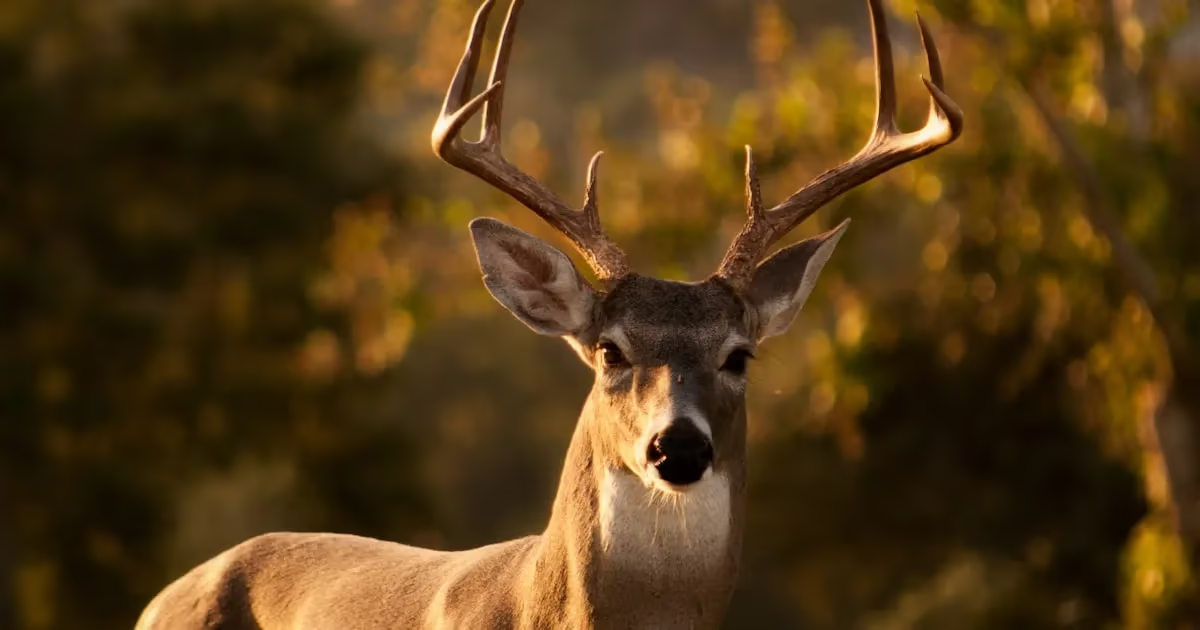
But this year Phil wasn’t with me. I was sitting alone in a ladder stand at 6:30 AM when a nice eight-point buck walked out at 70 yards. Broadside. Perfect shot. One round from my Ruger American in .308, right behind the shoulder. He ran about 40 yards and piled up at the edge of the tree line.
And then I climbed down and walked over to 180 pounds of deer lying in the grass and realized I had to do this myself.
I’d watched YouTube videos. Probably fifteen of them. They all made it look clean, easy, like carving a Thanksgiving turkey. Three minutes, couple of cuts, everything slides out neat and tidy.
It is not like that.
It took me an hour and fifteen minutes. I punctured the bladder. I nicked the intestines. I cut myself twice — once on the pelvis bone, once because my knife slipped on a bloody rib and went into my left thumb. I was covered in blood up to my elbows and there were things in that body cavity that I was not emotionally prepared for.
But I got it done. The meat was fine — a little warm because it took so long, but fine. And the second time I did it, it took 25 minutes. The third time, 15. Now I can field dress a deer in 8-12 minutes without rushing, and I’ve helped probably a dozen first-timers through their first one.
So here’s what I wish someone had told me standing over that buck in Levy County. Not the sanitized YouTube version. The real one.
Before You Start: Get Your Stuff Ready
Don’t do what I did and start cutting with just a pocket knife and no gloves. Get your kit together BEFORE you walk up to the deer.
Nitrile gloves come first. Not latex — some people are allergic and they tear easier. A box is $8 at Walmart. I keep a small baggie of four or five pairs in my pack. Put them on before you touch anything. This isn’t about being squeamish — deer can carry diseases (CWD, leptospirosis, tularemia) and blood-borne stuff that you don’t want getting into a cut on your hand. Remember that cut on my thumb? Yeah.
Your knife needs to be sharp — fixed-blade, 3-4 inch blade, not your EDC pocket folder. The operative word is SHARP. A dull knife is more dangerous than a sharp one because you push harder and it slips. I use a Havalon Piranta with replaceable scalpel blades. $35 and the blades are surgical sharp. When one gets dull, you pop it off and snap on a new one. Takes five seconds. If you want a fixed blade, a Morakniv Companion ($15) works great — check our best survival knives guide for more options.
A gutting knife or gut hook (optional but helpful). Some knives come with a gut hook — that rounded hook on the spine of the blade. It lets you open the belly without puncturing the intestines. The Outdoor Edge RazorLite has both a regular blade and a gut hook blade. About $30.
Zip ties or paracord. For tying off the esophagus and bladder. I carry a handful of zip ties because they’re lighter, smaller, and faster than tying knots with bloody hands.
Game bags — cheesecloth-style bags that go over the quarters or around the cavity to keep flies off — run about $8 for a four-pack at Bass Pro. In warm weather they’re not optional.
A small headlamp. Because you will eventually be field dressing a deer at dawn or dusk and you need both hands. The one in your bug-out bag works fine for this.
Wear Gloves — This Is Not Optional
Deer carry zoonotic diseases including CWD, leptospirosis, and tularemia that can enter through cuts in your skin. Nitrile gloves cost $8 for a box of 100. There is no reason not to wear them. Put them on before you touch the deer and keep them on until you’re cleaned up.
Step One: Position the Deer
Roll the deer onto its back. If you’re on a slope, position it so the head is uphill. Gravity is your friend here — you want stuff to drain away from the chest cavity, not into it.
Spread the back legs apart. If you can brace them against rocks, logs, or have someone hold them, great. If you’re alone, I sometimes tie a back leg to a small tree with paracord to keep things open.
Step Two: Make the First Cut
This is where most first-timers panic because they’re about to put a knife into a deer and it feels weird. It IS weird. But you’ve eaten plenty of meat in your life and this is where it comes from. Take a breath. You’re fine.
Find the bottom of the sternum — that’s the hard bone running down the center of the chest. Go about two inches below the end of it. That’s your starting point.
Pinch the skin and pull it up, away from the organs underneath. Cut through the skin only. ONLY THE SKIN. You’ll feel two layers — the hide and a thin membrane underneath. Cut through both but stop when you see the white lining of the belly cavity.
Now this is the part that matters. You need to open the belly from sternum to pelvis without puncturing anything inside. There are two ways to do this.
Method one: two-finger guide. Insert your index and middle finger into the small opening you made, palm up, and use them as a guide. Slide the knife blade (edge up, facing the sky) between your fingers, cutting the belly lining as you go. Your fingers keep the blade away from the intestines. This is what I do and it works every time.
Method two: gut hook. If your knife has a gut hook, insert it into the opening and pull toward the pelvis. The hook catches the belly lining and cuts it cleanly without going deep enough to hit the guts. Easier for beginners, honestly.
Extend the cut all the way to the pelvis. You’ll feel the pelvic bone — stop there. Don’t try to cut through it yet.
Two-Finger Guide Prevents Gut Punctures
The two-finger guide method is the most reliable way to open the belly without puncturing intestines. Slide your index and middle fingers into the opening palm-up, then run the knife blade between them with the edge facing up. Your fingers physically push organs away from the blade as you go.
Step Three: The Pelvic Cut (Optional But Worth It)
Some people skip this. On does and smaller bucks it’s not strictly necessary. But on a big buck, splitting the pelvis makes getting everything out dramatically easier.
Use a sturdy knife or a pair of game shears to cut through the pelvic bone at the center. It’s cartilage in young deer and can be cut with a knife. On older bucks, it’s actual bone and you’ll need a saw — a small folding bone saw works, or a Sawzall blade in a T-handle.
Once the pelvis is split, the back end of the digestive tract comes out in one piece instead of you trying to reach up inside and cut things blind.
Step Four: Remove the Entrails
Here’s where it gets real. And a little gross. And that’s okay.
Reach up into the chest cavity as far as you can. You’ll feel the esophagus — it’s the tube running down from the throat into the stomach. It feels like a garden hose. Grab it, pull it toward you, and cut it as high as you can reach. Some guys tie it off with a zip tie first so stomach contents don’t leak. Smart move.
Also cut the windpipe (trachea) while you’re up there. It’s right next to the esophagus and feels harder, more rigid.
Now, working from the top down, start pulling the organs out. The heart and lungs come first. They’re connected to the diaphragm — that’s the thin muscle wall separating the chest from the belly. Cut along the diaphragm where it connects to the rib cage. Both sides.
Everything should start to come out in one big mass. The heart, lungs, liver, stomach, intestines — it all kind of rolls out if you’ve done the cuts right. Use your knife to cut any connective tissue that’s holding things in, but be careful around the stomach and intestines. You do NOT want to puncture them.
At the back end, cut around the anus. This is awkward but necessary. Cut a circle around it, freeing it from the surrounding tissue, and pull it through (from inside the body cavity). If you split the pelvis, this is much easier. If you didn’t, it’s doable but tighter.
The bladder is attached near the bottom. Cut it free carefully. If you puncture it, urine gets on the meat, which doesn’t ruin it but doesn’t help the flavor either. Ask me how I know.
Step Five: Drain and Clean
Once everything is out, tip the deer slightly to drain any blood pooled in the body cavity. If you have water — a water bottle, a nearby creek — rinse the inside of the cavity. If you don’t have water, use grass or dry leaves to wipe out as much blood as possible.
Check for any remaining bits of tissue, organ, or diaphragm. Get it clean. Any material left inside traps heat and accelerates spoilage, which is especially a problem in warm weather.
This is also when you check for anything abnormal — discolored organs, parasites, abnormal growths. If something looks seriously wrong, don’t eat the meat. Report it to your state wildlife agency. Chronic Wasting Disease is spreading through deer populations and it shows up as an emaciated animal with abnormal behavior, but testing requires a lymph node sample sent to a lab.
Step Six: Cool It Down
Heat is the enemy. Bacteria multiply fast in warm meat and spoilage starts within hours in warm weather.
In cold weather (below 40°F), you’ve got time. The carcass will cool on its own and you can transport it to camp or home within a few hours without worry.
In warm weather — anything above 50°F — you need to act fast. Prop the body cavity open with a stick to let air circulate. Get the deer to shade. If you have bags of ice, put them inside the cavity. Get the meat into a cooler or refrigeration as quickly as possible.
The rule of thumb: internal meat temperature needs to get below 40°F within a few hours. In Florida in November, where it might be 75°F at midday, I’ve had to quarter a deer in the field and get it on ice within two hours. It’s a race and the meat quality depends on winning it.
Warm Weather Means You're Racing the Clock
In temperatures above 50°F, bacteria multiply fast in unprocessed deer meat. Field dress immediately after recovery, prop the cavity open for airflow, and get the carcass cooled below 40°F within a few hours. In Florida or warm fall conditions, plan to quarter the deer and get it on ice within two hours of the kill.
The Mistakes That’ll Ruin Your Meat
I’ve made all of these. Learn from my suffering.
Waiting too long. Field dress as soon as possible after the kill. Every minute those guts are inside the deer, body heat is working against you. Especially if you gut-shot the animal — digestive contents on the meat accelerate spoilage drastically. I try to be opening the deer within 15-20 minutes of recovery.
Going in with a dull knife is probably the most common mistake I see. You’ll push harder, slip more, cut yourself, and puncture organs. A dull knife turns a 10-minute job into a 30-minute mess. I sharpen my knife on a ceramic rod right before every hunt. Takes 60 seconds.
Skipping the gloves is another one. I know, you’re tough, you don’t need gloves. Fine. But when you have a cut on your hand and deer blood gets in it, and you spend the next week wondering if you’re going to get leptospirosis, you’ll wish you’d worn them. They’re $8 for a box of 100.
Puncturing the stomach or intestines. The smell is unforgettable. And not in a good way. If it happens — and it happens to everyone eventually — immediately rinse or wipe the affected area. The meat is usually still fine, but it needs to be cleaned well and quickly.
Leaving the tenderloins. There are two small muscles running along the inside of the backbone, inside the body cavity. These are the tenderloins and they are the BEST part of the deer. Many first-timers don’t even know they’re there and leave them attached to the spine. Don’t. Reach in, find them — they’re about the size and shape of a pork tenderloin — and pull them free. They’ll come off with just a little knife work. Cook them that night with butter and garlic. You’ll never eat a better piece of meat.
Tools of the Trade: What’s Worth Buying
After processing probably 30+ deer, here’s what I actually use:
Havalon Piranta ($35). My primary field dressing knife. Replaceable scalpel blades mean it’s always stupid sharp. I bring three extra blades in a small case.
Outdoor Edge RazorLite ($30). My backup with a gut hook blade. Nice to have for the belly cut.
Nitrile gloves ($8/box). Non-negotiable.
6 zip ties. For tying off the esophagus and anus.
Two game bags ($8). For warm weather.
Small bone saw ($15). For splitting the pelvis on bigger bucks.
Paper towels in a Ziploc. For cleanup.
Total kit cost: about $100. Fits in a gallon Ziploc bag inside my pack.
A Note on Respect
I’m going to end with something that might sound corny but I think it matters.
Field dressing is where hunting stops being a sport and starts being a food-gathering act. You took an animal’s life and now you’re turning it into food for your family. That’s a responsibility. Treat it like one.
Take care of the meat. Don’t let it spoil because you were lazy. Don’t waste any of it — if you can’t use the heart and liver yourself, find someone who will. Process the scraps into ground venison or give them to someone who makes dog food.
And if you’re getting into deer hunting for the first time, know that field dressing is part of the deal. It’s not the pretty part. But it connects you to your food in a way that a grocery store never will.
That eight-point buck from Levy County? My wife and I ate on that deer for four months. Backstraps, stew meat, ground venison, jerky. Best-tasting meat I’d ever had, partly because it was good venison but mostly because I’d done every part of it myself.
Even the part where I punctured the bladder.
One more thing — keep a solid first aid kit in your hunting pack. Knives are sharp, conditions are slippery, and cuts happen. Ask me how I know.