This article contains affiliate links. We may earn a small commission if you purchase through these links, at no extra cost to you.
I built what I thought was a solid bug-out bag two years ago and decided to test it with a 10-mile hike on a moderate trail. Not even a real emergency — just a day out. Fifteen minutes in, my shoulders were burning. An hour in, my lower back was complaining loudly. I made it through the hike, but barely, and I was moving slowly by the last three miles. When I got home and weighed the pack, it was 61 pounds. I weigh 170.
That is 36% of my body weight. Military personnel typically carry 30 to 45% of body weight in combat loads — but they train specifically for that and have conditioning programs designed around it. A sedentary civilian carrying 36% of their body weight through uncertain terrain is going to get hurt or exhausted, neither of which is useful in an actual emergency.
The 10% Rule Does Not Apply to Bug Out Bags
The “10% of body weight” guideline comes from school backpacks and day hike recommendations for children. It is wildly inapplicable to a multi-day emergency carry system for adults.
A more realistic and widely used benchmark for adults in reasonable fitness is 20% to 25% of body weight for an extended carry. A 150-pound person at 20% is carrying 30 pounds. A 200-pound person at 25% is carrying 50 pounds. These are workable numbers for experienced hikers but will be punishing over multi-day distances for people who do not regularly hike with weight.
Use the Gear Weight Calculator to find your actual pack weight and see exactly what percentage of your body weight it represents.
Ideal Weight Ranges by Fitness Level
Sedentary or low-activity adults: Target total pack weight (including food and water) of 20 to 30 lbs. This is uncomfortable but manageable for distances under 10 miles per day.
Moderate fitness / occasional hiking: 25 to 40 lbs is workable for multi-day distances on reasonable terrain without serious injury risk.
Fit / regular hikers with pack experience: 35 to 50 lbs for extended carries. Some can manage more but should plan for fatigue accumulation over multiple days.
No one should aim for 65+ pounds unless specifically trained for loaded carries. At that weight, injury risk over multiple days is very high regardless of fitness.
The Big Three Drive Most of Your Weight
In any serious pack assessment, three item categories dominate: shelter, sleeping system, and the pack itself.
Pro Tip
The Big Three — your shelter, sleep system, and pack — typically account for 50 to 70% of your base weight (everything except food and water). A standard dome tent at 6 lbs, a synthetic sleeping bag at 4 lbs, and a full-frame pack at 5 lbs gives you 15 lbs before you have added a single item of gear. Switching to a 2-lb ultralight shelter, a 2-lb down bag, and a 2-lb frameless pack cuts that to 6 lbs — a 9-lb reduction from just three items.
Other Common Heavy Culprits
Beyond the Big Three, items that frequently add significant weight without proportional survival value include:
- Water (8.34 lbs per gallon): Carry 2 liters (4.4 lbs) and plan to filter en route rather than carrying 3+ liters of dead weight.
- Tools: A full-size axe is 4 to 6 lbs; a quality hatchet is 1.5 lbs; a good fixed-blade knife handles most tasks at under a pound.
- Clothing excess: Two changes of everything doubles your clothing weight. One functional set plus rain gear covers most scenarios.
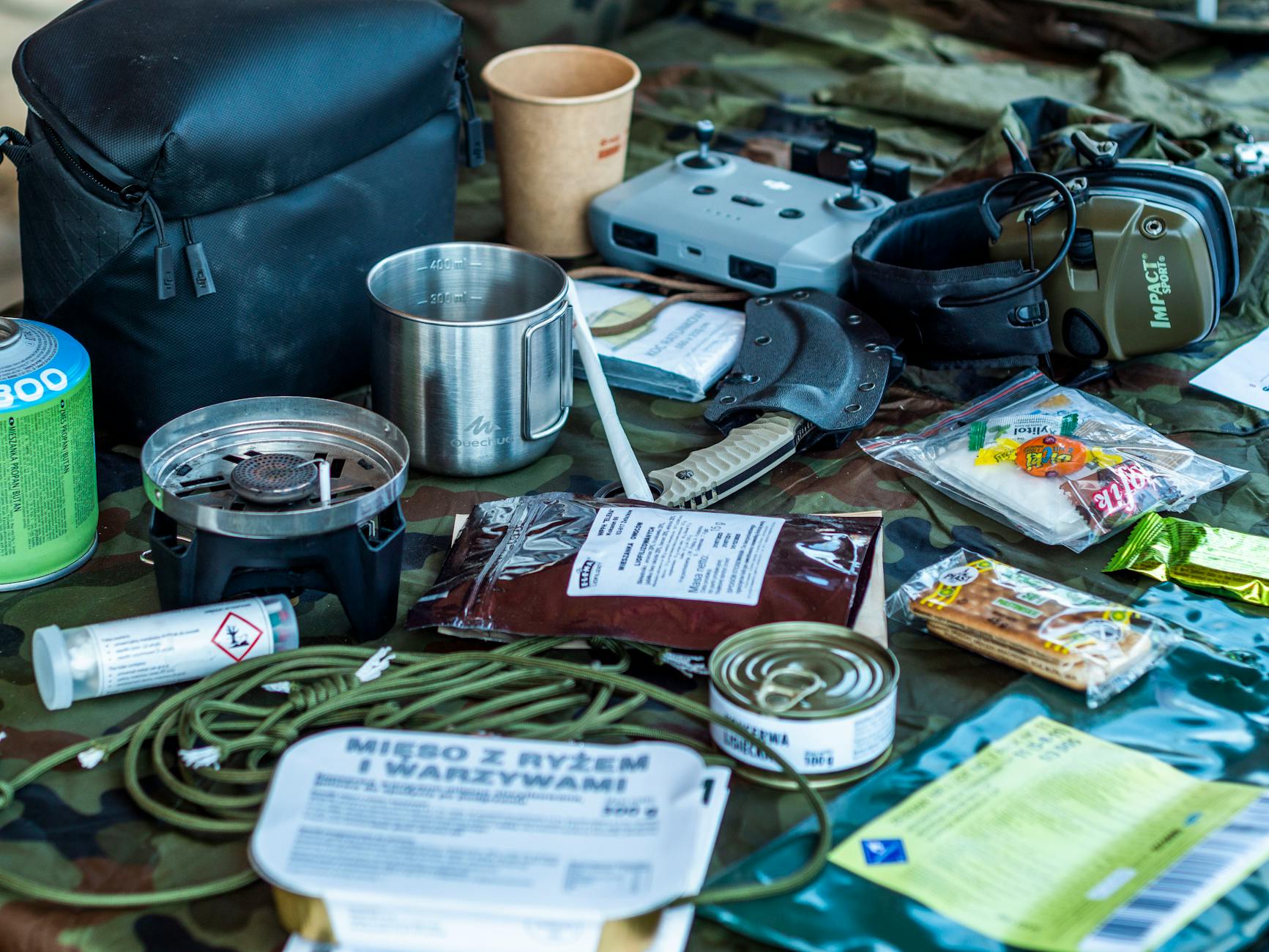
- Canned food: At 14 to 16 oz per can, canned food is the least weight-efficient emergency food. Freeze-dried meals or dense dry foods weigh a fraction of equivalent calories.
Fitness Is Part of the Equation
No calculator changes the fact that your fitness level determines how much weight is manageable for you specifically. A 40-pound pack that feels moderate to a seasoned backpacker will incapacitate someone who has not hiked with weight in years.
If your target weight is realistic but you are not there physically, the solution is to train with a weighted pack over the next several months — not to add more gear to feel more prepared. Carrying a heavy pack you cannot handle makes you less safe, not more.
For a comprehensive breakdown of what should be in a 72-hour system and how each category contributes to total weight, the Building a 72-Hour Bug Out Bag guide covers the full framework.
Calculate and Test Your Pack Weight
Run every item in your current pack through the Gear Weight Calculator to get your real total. Then take that pack on a test hike of at least 5 miles before relying on it in an emergency. A pack that feels manageable in your garage will feel different after two hours on uneven terrain.
For cold weather scenarios where insulation requirements increase pack weight, the Cold Weather Survival Avoiding Hypothermia guide covers how to balance warmth and weight in your layering system.
Your bug-out bag should get you out of danger, not slow you down. Test it. Weigh it. Trim it.