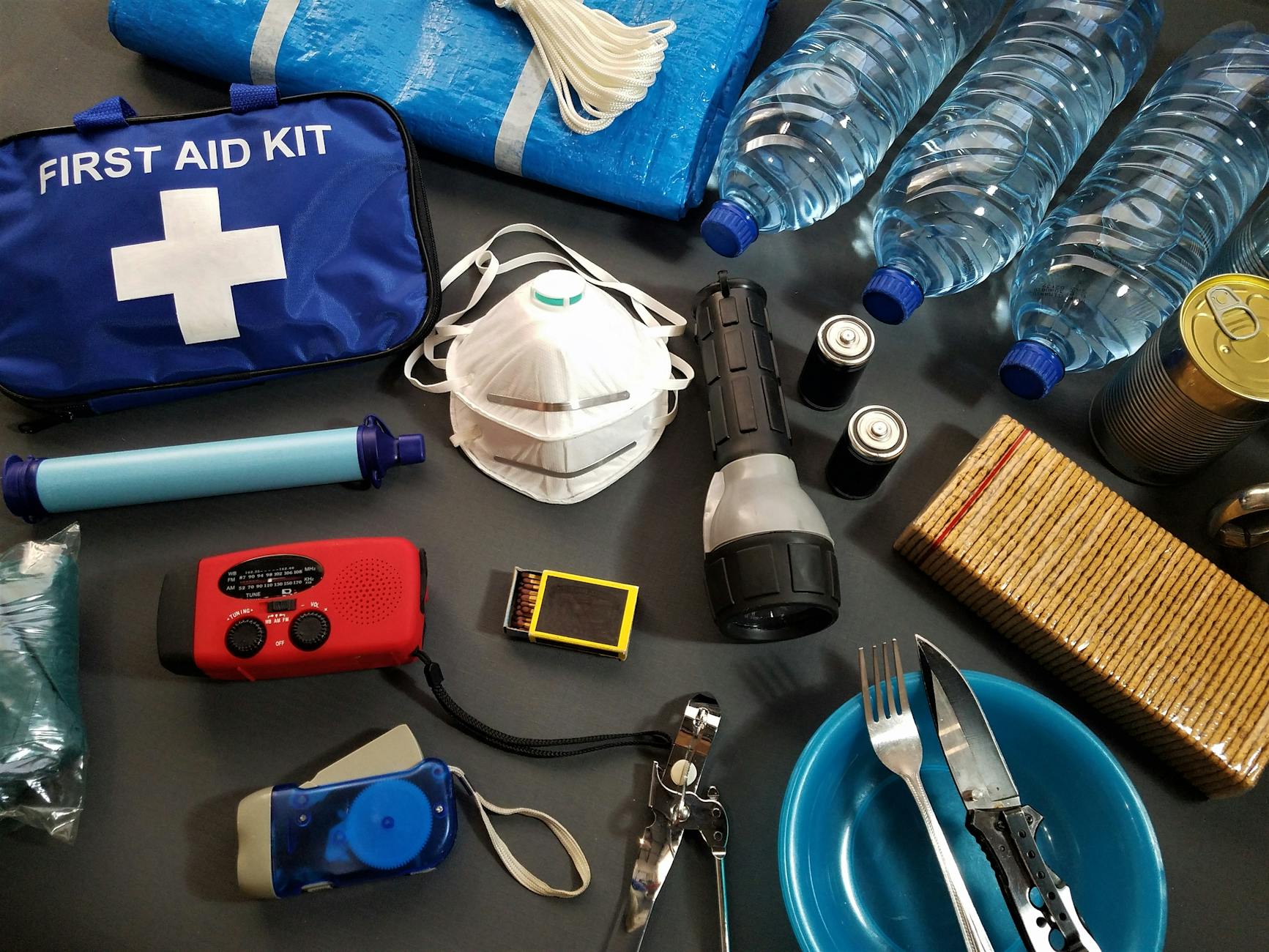
Last winter, a severe ice storm knocked out power to my neighborhood for four straight days. The first evening felt almost fun — candles, board games, the novelty of it all. By day two, I was standing in my kitchen realizing I had no idea exactly how much food I had, no water stored beyond what was in the tap, and no flashlights with working batteries. Four days without power in subfreezing temperatures is not a situation you want to improvise through.
That experience pushed me to build out a real emergency supply. And the best starting point I found was using an online Emergency Kit Estimator to figure out exactly what I needed and in what quantities — rather than guessing and shopping blind.
What the Emergency Kit Estimator Does
The tool takes your household details as inputs and outputs a customized supply list — including specific quantities for each item and an estimated cost. Instead of relying on a generic checklist (which may be too much for a single person or nowhere near enough for a household with young children), it calculates needs based on your actual situation.
Step 1 — Enter Your Household Size
Start by entering how many people will depend on this kit. Every category of supplies — food, water, first aid — scales with the number of people. A household of one and a household of six have very different needs. The estimator handles the math so you do not have to.
Step 2 — Flag Special Needs
Does anyone in your household take daily prescription medications? Are there infants who need formula or toddlers who need specific foods? Does anyone rely on powered medical equipment like a CPAP machine or nebulizer? The Emergency Kit Estimator has fields for these variables. Getting them right matters — a kit that does not account for insulin storage or a baby’s dietary needs is incomplete no matter how much food you have stacked.
Step 3 — Include Pets
Pets need emergency supplies too. A 60-pound dog requires roughly half a gallon of water per day and several cups of dry food. The estimator lets you specify pets by type so their needs factor into the total supply calculation.
Step 4 — Select Disaster Type and Duration
Different disasters have different profiles. A hurricane evacuation needs a portable, quick-grab kit. A prolonged grid-down scenario at home requires something much larger. A 72-hour kit is the minimum recommended by FEMA — but 2 weeks is a more realistic buffer for most regional disasters. Select what fits your area’s actual risk profile.
Pro Tip
If you live in an area prone to multiple hazard types — say, both earthquakes and wildfires — run the estimator twice with different disaster selections and use the larger output as your baseline. Combining scenarios ensures you are not under-stocked for your worst-case event.
Step 5 — Review the Output
After you submit your inputs, the estimator generates a detailed list: gallons of water, days of food supply, first aid items, communication tools, and more — each with a recommended quantity. It also provides an estimated total cost, which helps you budget and prioritize purchasing over time rather than trying to buy everything at once.
What to Do with Your List
Print it or save it. Then work through it systematically over the next few weeks. Buying everything at once is expensive and overwhelming — most experienced preppers build their kit over 30 to 90 days, rotating in perishables and checking for items they already have at home.
For a deeper look at the philosophy and planning behind full household preparedness, the Complete Emergency Preparedness Guide is worth reading alongside the tool output.
If your scenario includes evacuating rather than sheltering in place, check out the guide to Build a 72-Hour Bug Out Bag for the go-bag version of emergency prep.
Keep Your Kit Current
Run the estimator again whenever your household changes — a new baby, a new pet, a moved address, a new medical condition. Emergency supply needs are not static. An outdated kit can be just as dangerous as no kit at all if the quantities are based on old information.
The estimator is a starting point. Your job is to take that output and turn it into real supplies on real shelves. Starting with accurate numbers makes that process faster and less wasteful than guessing.