This article contains affiliate links. We may earn a small commission if you purchase through these links, at no extra cost to you.
Last February I learned the lesson I should have learned the previous spring. My firewood supply dropped below one cord in the coldest week of the year, and there was nothing I could do about it in the moment. Suppliers were sold out. Cutting my own was not a realistic option in two feet of snow. I spent that last cold stretch burning wet wood I pulled from the back of the pile — wood that smoked, burned poorly, and left my chimney coated in creosote. The whole situation was completely avoidable with proper planning back in April.
Calculating your firewood needs before the season starts is the single most important thing you can do for off-grid heat security. Here is what you need to know to do it right.
What a Cord of Wood Actually Is
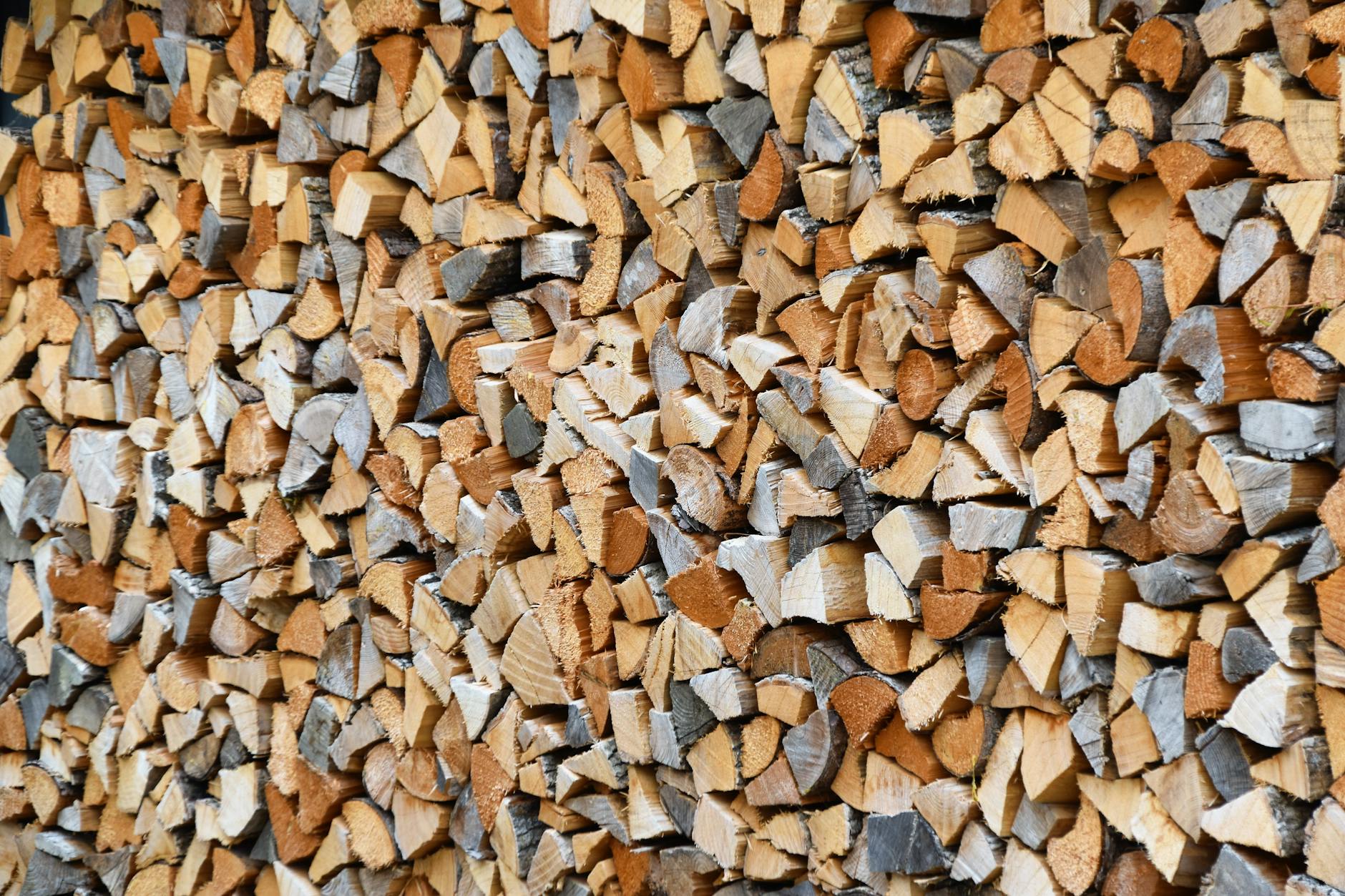
A full cord of firewood is a stack measuring 4 feet wide, 4 feet tall, and 8 feet long — exactly 128 cubic feet of stacked wood. This is the standard unit for buying and selling firewood and the unit the Firewood Calculator outputs.
You will also encounter “face cords” or “rick” — these are typically one-third of a full cord (a single layer of 16-inch pieces stacked 4x8 feet). A face cord is not a cord. Make sure you know what unit your supplier is selling before agreeing on a price.
BTU Output by Wood Species
Not all wood is equal in terms of heat. The difference between a low-quality species and a high-quality hardwood can be nearly 2:1 in heat output per cord:
| Species | Million BTUs per cord |
|---|---|
| Osage orange (hedge apple) | 32 |
| Black locust | 27 |
| Shagbark hickory | 27 |
| White oak | 26 |
| Red oak | 24 |
| Sugar maple | 24 |
| Ash | 23 |
| Cherry | 20 |
| Eastern white pine | 14 |
| Cottonwood | 13 |
If you are heating primarily with pine because it is what grows on your land, you will need roughly twice the volume of cords compared to burning oak. The Firewood Calculator accounts for species when it generates your seasonal cord estimate.
How Home Size and Insulation Change Everything
A well-insulated 1,500 square foot home might need 2 cords to get through a northern winter. An older, drafty home of the same size might need 4 to 5 cords. Insulation is not just a comfort upgrade — it is a heating multiplier.
Drafts, single-pane windows, uninsulated basements, and poor weatherstripping all create continuous heat loss that the stove has to constantly compensate for. If your home loses heat fast, your firewood requirement goes up proportionally.
Climate and Degree-Day Calculations
“Degree days” measure heating demand over a season by counting the cumulative degrees below 65°F for each day. A location with 5,000 heating degree days per year has significantly more heating demand than one with 2,500. This is why the same house in Maine needs twice the firewood as the same house in Virginia.
The Firewood Calculator uses your location’s climate data and heating season length to build this into its estimate automatically.
Stove Efficiency Matters More Than Most People Realize
An open masonry fireplace converts roughly 10 to 25% of wood’s energy into usable room heat — the rest goes up the chimney. An EPA-certified modern wood insert runs at 70 to 85% efficiency. That 60-percentage-point efficiency gap means a modern stove requires roughly one-third the wood of an open fireplace to produce the same heat output.
If you are heating with a fireplace and considering an insert, the firewood savings alone often justify the cost within two seasons.
Green Wood vs Seasoned Wood
Green wood (freshly cut) contains 40 to 60% moisture by weight. Seasoned wood drops to 15 to 20% moisture after 6 to 12 months of air drying. The difference matters enormously:
- Green wood burns at a fraction of its BTU potential because energy is wasted evaporating water
- Green wood produces far more smoke
- Green wood generates significantly more creosote — a waxy residue that builds up in chimneys and is a leading cause of chimney fires
Pro Tip
Buy or cut your firewood in spring and let it season all summer before burning it that fall and winter. Use a pin-type moisture meter to test pieces before adding to your burn pile — target under 20% moisture. Wood that reads above 25% will burn poorly no matter what species it is.
Storage Requirements
One cord of properly stacked split wood requires approximately 4 feet x 8 feet x 4 feet of covered storage space. Three cords needs 384 cubic feet. The storage area should:
- Keep wood off the ground (pallets work well) to prevent bottom rot
- Have airflow on at least three sides for continued drying
- Have a roof or tarp cover to keep rain and snow off the top
Never store firewood directly against your house — it invites termites, carpenter ants, and rodents directly to your foundation.
Putting It Together
For a complete picture of off-grid living beyond heating, the Complete Guide Off Grid Living covers water, power, food production, and heating as an integrated system. And if you are managing rainwater alongside your wood heat system, the Rainwater Harvesting Complete Guide covers system design and storage sizing with the same detail.
Plan your firewood before the season. Buy seasoned wood, or cut early enough for it to season before you need it. Stack it properly, store it covered, and you will not be rationing heat in February.