This article contains affiliate links. We may earn a small commission if you purchase through these links, at no extra cost to you.
I walked out to my woodpile one October morning to start pulling wood in for the week and found the bottom two rows completely rotted. Not slightly soft — actively crumbling, black with mold, and infested with carpenter ants that had been living quietly in there since spring. Three months of wood, gone. I had stacked that wood on bare ground thinking the ground contact was fine because I had seen people do it that way. I had not understood what ground contact actually does to wood over months.
If you are relying on firewood as a primary or backup heat source, storage mistakes can cost you weeks of heat when you have no good alternatives. Here are the five most common ones.
Mistake 1 — Storing Wood Directly on the Ground
Ground contact is the single biggest destroyer of firewood. Soil stays damp, transfers moisture directly into the bottom layers of the stack, and provides an ideal environment for wood-rotting fungi and insects. Termites, carpenter ants, and wood borers are all attracted to wood in ground contact, and from a stack against or near your home, they will eventually find their way into the structure.
Elevate your wood at least 6 inches above grade using pallets, concrete blocks, or dedicated firewood racks. The elevation keeps bottom layers dry and creates air space underneath that discourages insect colonization. This one change can extend the life and quality of your stored wood dramatically.
Mistake 2 — No Airflow on the Sides
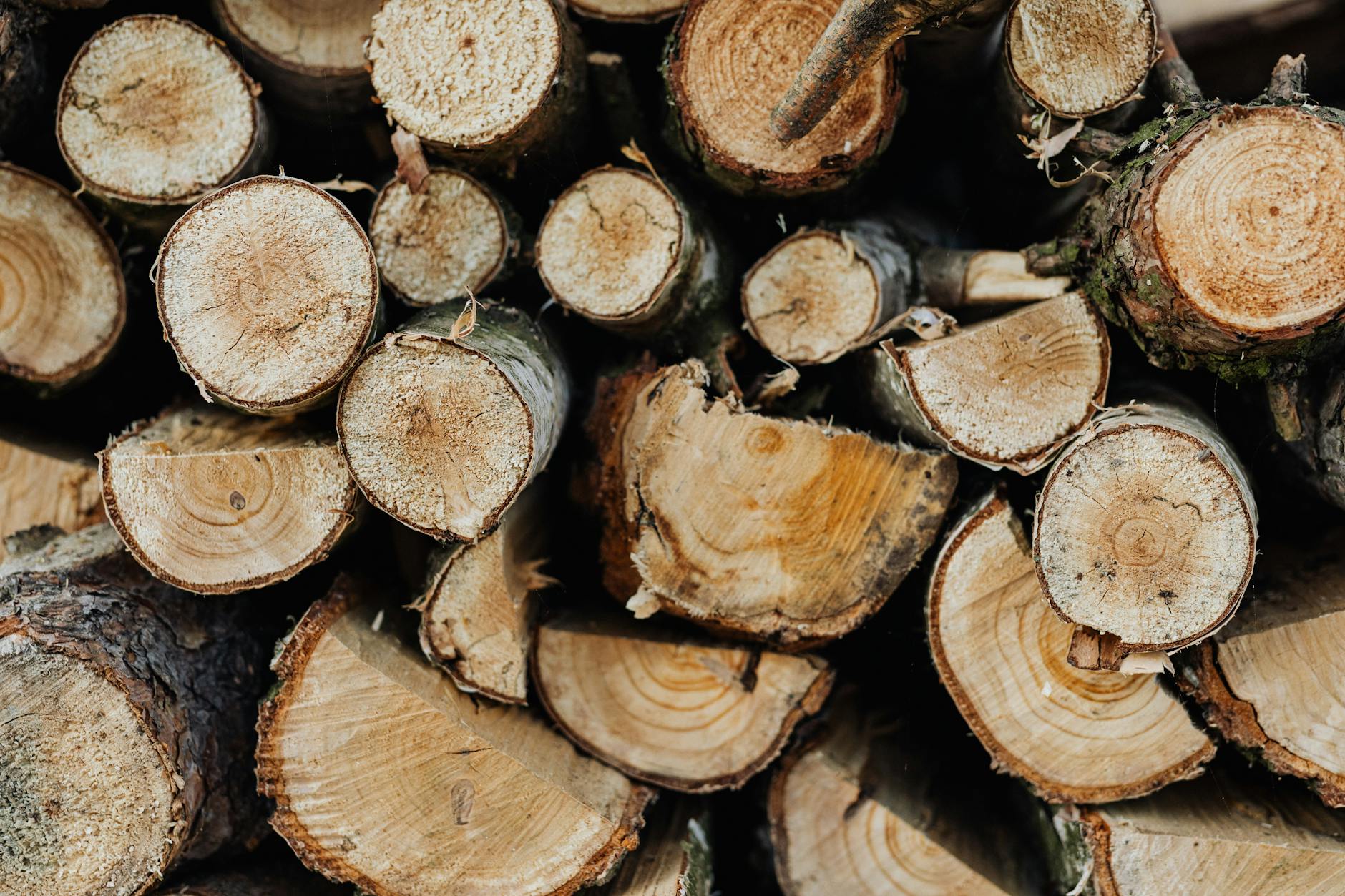
Tight-packed stacks without gaps look neat but trap moisture inside the pile. Wood drying (seasoning) depends on air movement pulling moisture out. Without airflow on the sides, wood in the interior of a tight stack can stay wet for months or even year-round.
Stack wood so there is visible space between pieces and leave at least 6 inches of clearance between the stack and any wall or fence. Crisscross the ends of stacks (“log cabin” ends) for stability while maintaining airflow. The goal is not just to keep water out — it is to let moisture escape from wood that is already inside.
Mistake 3 — Leaving Wood Unprotected from Rain and Snow
The top of the stack needs a cover. Rain and snow penetrate deeply into an uncovered pile, saturating wood that may have been properly seasoned and dramatically reducing its burn quality.
A simple solution is a waterproof tarp draped over the top (but not the sides — covering the sides prevents airflow). A roofed woodshed is better if you have the space and budget. The key is to keep precipitation off the top while maintaining side airflow. A pile with its sides wrapped in plastic traps moisture and accelerates mold growth — the opposite of what you want.
Warning
Burning wet or poorly stored wood creates excessive smoke and significantly increases creosote buildup inside your chimney. Creosote is the primary cause of chimney fires — which can happen with little warning and spread to the structure rapidly. Have your chimney inspected and swept annually if you burn wood, and do not burn wood with moisture content above 25%.
Mistake 4 — Mixing Green Wood With Seasoned Wood
Fresh-cut (green) wood needs 6 to 12 months to season before it burns efficiently. Mixing green pieces into a stack of seasoned wood does two things: it keeps the seasoned wood wetter than it should be through moisture transfer, and it means you cannot easily identify which pieces are ready to burn and which are not.
Keep green wood in a separate stack, clearly marked with the cutting date. Rotate seasoned stock to a dedicated burn pile and add newly seasoned wood as it becomes ready. This system keeps your ready-to-burn supply clean and your green wood drying without contaminating your main stock. Use the Firewood Calculator to plan how much of each you need so you are not tempted to burn green wood before it is ready.
Mistake 5 — Storing Too Close to the House
Firewood is an insect highway. Wood-boring beetles, carpenter ants, termites, and rodents all use woodpiles as habitat. A pile stacked against your foundation puts that insect and rodent population directly adjacent to the structure.
Store firewood at least 20 to 30 feet from your home and other structures. Bring in only what you need for a day or two at a time. Never store large amounts of wood inside your home or in an attached garage for extended periods — that is how pest problems start that take months and significant money to resolve.
Use the Firewood Calculator to know exactly how much wood you need, stack it properly away from the house, and rotate it systematically through winter. For broader guidance on off-grid heating, water, and power systems together, the Complete Guide Off Grid Living covers the full picture.
Your firewood supply is only as good as how it is stored. Stack it right, and it burns right.