This article contains affiliate links. We may earn a small commission if you purchase through these links, at no extra cost to you.
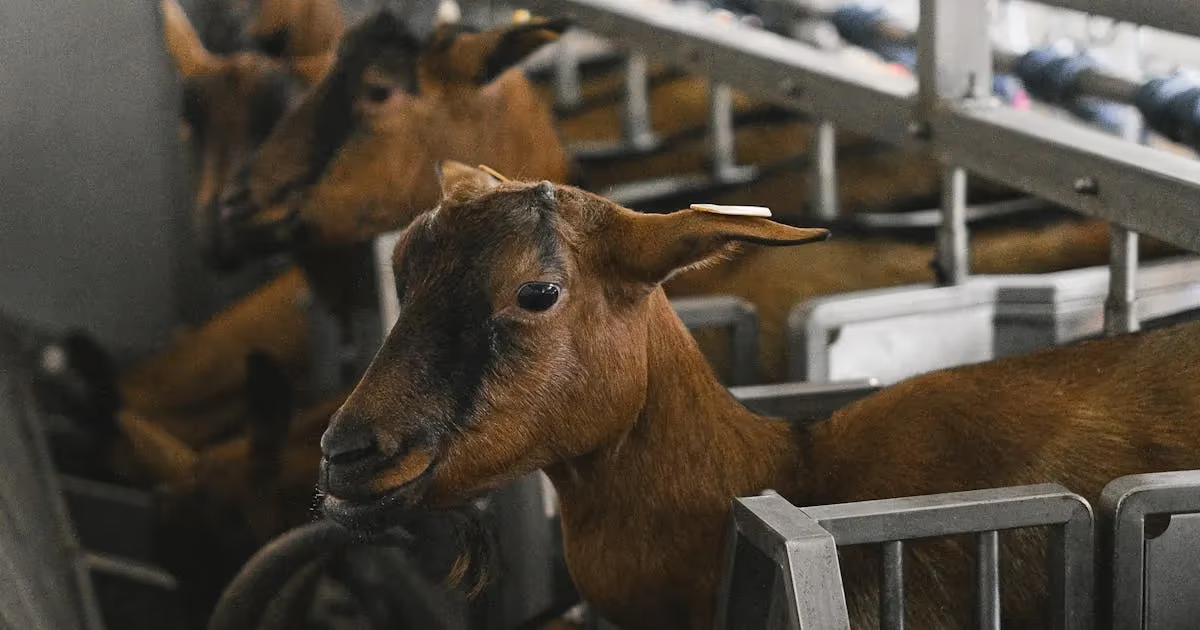
I’m standing in a guy named Terry’s backyard in Plant City, Florida, handing him $450 cash for three Nigerian Dwarf goats. Two does and a whether. Their names are Pepper, Biscuit, and Frank.
Terry tells me they’re “easy keepers.” Low maintenance. Just need some hay, a little grain, fresh water, and a “decent fence.” His words. Decent fence.
I had a four-foot chain link fence around my back acre. It was a decent fence. For dogs. For children. For the general purpose of keeping things in and out of a yard.
For goats, it was a suggestion.
Pepper was out within 48 hours. Not over the fence — THROUGH it. She found a spot where the chain link was attached to a post with those little metal ties, pushed against it until the ties bent, squeezed her head through, and then her body followed because apparently goats are 80% skeleton and 20% audacity. I found her in my neighbor’s garden eating his pepper plants. The irony of a goat named Pepper eating actual peppers was not lost on me. It was lost on my neighbor, who was furious.
That was day two. I’ve had goats for four years now. We’re up to seven — the original three plus four kids born on the property. I’ve replaced every inch of fencing, built a barn, installed a milking stand, learned to trim hooves, treat parasites, assist with a breech birth at 2 AM, and had approximately 300 conversations with my wife about why we need goats.
Milk, companionship, brush clearing, and the fact that goats are genuinely the funniest animals on earth. The answer is also insanity. Both things are true at the same time.
Choosing Your Breed (Size Matters)
On a small property — under five acres — your breed choice determines everything. Some goats are designed for 100-acre ranches. Others do fine on a quarter acre.
Nigerian Dwarfs are what I have and what I recommend for small properties. They max out at about 75 pounds and 22 inches at the shoulder. They give surprisingly rich milk — higher butterfat than full-size dairy breeds, which means better cheese, better soap, better everything. A good Nigerian doe gives 1-2 quarts per day. They’re friendly, handleable, and a 5-year-old can lead one on a leash.
I got mine from Terry for $150 each, which is about average. Registered breeding stock can go $300-500. Pet quality or wethers (castrated males) are $75-150.
Pygmies are similar in size to Nigerians but stockier — originally meat goats, not dairy. They’re cute and friendly but if you want milk, go Nigerian. If you want a pasture pet that’s easy on fencing and space, Pygmies are worth looking at.
Mini breeds are a middle ground worth knowing about. Mini-Nubians, Mini-LaManchas, Mini-Alpines — these are crosses between full-size dairy breeds and Nigerian Dwarfs, bigger at 100-130 pounds but still manageable. They give more milk than Nigerians, typically 2-3 quarts per day. If you’ve got an acre or more, they’re worth considering.
What to avoid on small properties. Full-size dairy breeds (Nubians, Alpines, Saanens) get 150-200 pounds and need more space, more feed, and more everything. Boer goats are meat breeds and they’re large, loud, and not what you want next to a suburban neighbor. Any intact male (buck) of any breed is going to smell terrible — I mean TERRIBLE — and should not be kept on a small property. Bucks produce a musk that is indescribable and your neighbors WILL notice.
Never Keep a Buck on a Small Property
An intact male goat produces a musk during rut that is overwhelming at close range and detectable from hundreds of feet away. Neighbors, even sympathetic ones, will not tolerate it. Use a buck service from a local farm for breeding or buy from a breeder with a service option — never keep one of your own on a small suburban or semi-rural property.
The Fence Situation (This Is Everything)
I cannot overstate this. Fencing is the most important thing. More important than the barn, more important than the feed, more important than anything else because if your goats get out — and they will TRY to get out — every other preparation is irrelevant.
What doesn’t work:
- Standard chain link (they push through it)
- Barbed wire (they don’t care)
- Three-board horse fence (they squeeze between the boards)
- Chicken wire (they destroy it)
- The “decent fence” that Terry described
What does work:
4-foot welded wire field fence (2x4 inch mesh) with a strand of electric wire at the top. This is what I ended up with and it’s held for three years. The small mesh size means they can’t get their heads through it (goats who get their heads through fences will eventually get their horns stuck if they have horns, or just push through if they don’t). The electric wire at the top discourages climbing.
Cost: About $1.80 per linear foot for the welded wire from Tractor Supply. For my back acre (roughly 830 linear feet of perimeter), the wire was about $1,500. Posts, hardware, and the electric fence setup added another $400. Total fencing investment: approximately $1,900.
Yeah. Almost two grand on fencing. For $450 worth of goats. Terry’s “decent fence” advice cost me about $1,500 in fence upgrades plus my neighbor’s pepper plants.
Budget Your Fencing Before You Budget Your Goats
New goat owners consistently underspend on fencing and overspend on animals. Measure your perimeter before buying a single goat and calculate the real cost of proper 2x4-inch welded wire fence. For most small properties that runs $1,500-$2,500 — budget that first, then figure out what’s left for animals.
Electric fence alone can work as a training fence, especially if you run multiple strands. A lot of goat people use 5-strand electric with alternating hot and ground wires. The goats learn to respect it quickly. But if the charger dies or the battery runs out, you have nothing. I use electric as a supplement to physical fencing, not a replacement.
Housing: Simpler Than You Think
Goats need shelter from rain and wind. That’s about it. They don’t need heated barns, they don’t need insulated walls (in Florida, anyway), they don’t need anything fancy. What they NEED is dry. Goats HATE being wet. They will stand in the rain and scream about it rather than walk ten feet to shelter, and then they’ll be mad at you because they’re wet. But they need the option.
Built a 10x12 foot three-sided shelter that I built from lumber and tin roofing. Cost me about $600 in materials. Floor is packed dirt with pine shavings for bedding, which I clean out and replace every 2-3 weeks.
What matters:
- Good ventilation. Ammonia from urine builds up fast in enclosed spaces and causes respiratory issues.
- Dry floor. Elevate it slightly if your area floods. Wet bedding plus goat hooves equals hoof rot.
- Enough space. Plan 15-20 square feet per standard goat, 10-15 for Nigerian Dwarfs.
- Predator security. Coyotes, stray dogs, and in some areas bobcats and mountain lions are real threats. My shelter has a door I close at night. If you’re in coyote country, this is not optional.
Feeding: Not as Simple as “Just Give Them Hay”
Goats are browsers, not grazers. Cattle eat grass. Goats eat brush, weeds, bark, leaves, your shirt if you stand too close, and the siding off your house if you give them the chance. They’re not lawnmowers — they’re weed eaters. Literally.
Free-choice hay is the foundation of the diet. I use coastal bermuda hay, which runs about $8-10 per square bale in Florida. A Nigerian Dwarf eats about 2-3 pounds of hay per day. My seven goats go through roughly one bale every two days — that’s about $150 per month in hay alone.
Dairy does in milk get grain on top of that: about 1 cup per quart of milk produced daily. I use a basic goat grain from Tractor Supply, $16 for a 50-pound bag. Wethers and dry does get little to no grain because excess grain can cause urinary calculi (kidney stones) in males and obesity in everyone else.
Minerals are the one thing most beginners skip, and it causes problems down the road. Goats need a loose mineral supplement formulated specifically for goats — not sheep mineral, which doesn’t have enough copper, and goats are copper-dependent. A bag of Manna Pro goat minerals is $15 and lasts about a month for my herd.
Never Feed Goats Sheep Minerals
Goats require significantly more copper than sheep. Sheep mineral blocks and loose minerals are formulated with low copper specifically to avoid toxicity in sheep — but that level is too low for goats and causes copper deficiency over time, leading to rough coats, poor immune function, and reproductive failure. Always use minerals labeled specifically for goats.
A box of baking soda in a small dish where they can access it anytime. Free choice. Goats self-regulate their rumen pH by eating it as needed. A dollar a month.
Water is easy to underestimate. Keep it clean and fresh at all times — goats are picky drinkers. If the water is dirty, warm, or has hay floating in it, they’ll refuse to drink and dehydrate fast. I use a 5-gallon bucket with a float valve on a garden hose. Refills automatically. Best $15 I spent on this whole operation.
Health Stuff That Will Come Up
Internal parasites are the number one health issue in goats, bar none. You’ll deal with barber pole worm (Haemonchus contortus) and it can kill fast — weeks from healthy to dead if the worm load gets high enough.
FAMACHA scoring is your best friend. It’s a method of checking the color of the goat’s lower eyelid membranes to assess anemia from blood-sucking parasites. Bright red/pink = good. White or pale = heavy worm load, deworm immediately. My vet taught me this in about five minutes and I check every goat every two weeks.
Don’t just deworm on a schedule. Overuse of chemical dewormers has created resistant parasite populations. Only deworm when FAMACHA scoring indicates a need. And rotate your dewormers — don’t use the same one every time.
Hoof trimming needs to happen every 6-8 weeks. Overgrown hooves cause lameness and create pockets for hoof rot bacteria. A pair of hoof trimmers is $10 at Tractor Supply and it takes about 5 minutes per goat once you know what you’re doing. My goats hate it — especially Frank, who acts like I’m amputating his legs every single time.
Vaccinations keep things simple if you stay on schedule. CDT vaccine covers Clostridium perfringens types C and D, plus tetanus — $8 for a 10-dose bottle at Tractor Supply, given annually. I also vaccinate kids at 4 weeks and again at 8 weeks.
Barber Pole Worm Can Kill Within Weeks
Haemonchus contortus (barber pole worm) is a blood-sucking parasite that can kill an adult goat in a matter of weeks during warm, wet months. Learn FAMACHA scoring — a 5-minute technique your vet can teach you — and check every goat’s eyelid color every two weeks during summer. Catching a heavy worm load early is the difference between a dewormer dose and a dead goat.
The Milk Situation
If you’re raising dairy goats — and Nigerian Dwarfs are dairy goats — you’ll eventually get into milking. And milking is either the best or most annoying part of goat ownership depending on your personality.
A Nigerian Dwarf doe in milk needs to be milked once or twice daily on a consistent schedule. I milk once a day and let the kids nurse during the day. This is more relaxed but produces less milk than twice-daily milking.
My milking stand was $65 in lumber and hardware. I built it from a plan I found in a homesteading book. It’s basically a raised platform with a stanchion to hold the goat’s head while she eats grain and you milk. Takes about 10-15 minutes per doe.
The milk is incredible. Richer than cow’s milk, naturally homogenized, and our Nigerian Dwarf milk has about 6-8% butterfat. We drink it raw (legal in Florida for personal use), make cheese, make soap, and give extra to the neighbors — including the one whose pepper plants got eaten, as a peace offering that eventually worked.
For more homesteading self-sufficiency, raising goats pairs nicely with backyard chickens and vegetable gardening. The goat manure goes into the compost, the compost goes on the garden, the garden produces food. The cycle works.
The Real Talk: Is It Worth It?
Monthly goat expenses:
- Hay: ~$150
- Grain: ~$30
- Minerals and supplements: ~$15
- Bedding: ~$20
- Miscellaneous (vet, supplies): ~$25
Total: about $240/month for seven goats.
Monthly goat income/savings:
- Milk (equivalent value): ~$120
- Kid sales: varies, but 4 kids this year at $125 each = ~$42/month amortized
- Brush clearing: saves me maybe $50/month in landscaping I don’t have to do
- Entertainment value: priceless, and I’m not being sarcastic
Am I breaking even? Not quite. But I’m close, and the quality of the milk alone — fresh, raw, from animals I feed and care for on my own property — is worth the gap. And every kid I sell gets closer to covering costs.
Would I do it again? In a heartbeat. But I’d start with the fence.
For anyone building toward self-sufficiency, goats pair well with backyard chickens and a vegetable garden. Together they create a homestead that actually produces meaningful amounts of food.
Always start with the fence.