This article contains affiliate links. We may earn a small commission if you purchase through these links, at no extra cost to you.
Three years ago, a guy in our hunting party took a bad step coming down a talus field above timberline and landed hard on his arm. We heard the sound — that flat, wrong crack that doesn’t sound like a normal impact. He looked at his forearm and went a particular shade of gray that I associate with serious pain and adrenaline shutting down at the same time.
We were six miles from the trailhead. No cell service. Three hours from the vehicle, and still on rough terrain.
Here’s what mattered in that moment: I knew how to splint the arm well enough to get him moving and stable. He walked out under his own power. We drove him to the ER. Radius fracture, non-displaced. Surgery the next week, full recovery.
Field splinting is not complicated. But you need to know it before you’re standing over someone on a hillside trying to remember whether you’re supposed to straighten the arm or leave it bent.
Table of Contents
- Know What You’re Dealing With First
- General Splinting Principles
- Improvised Splint Materials
- Upper Extremity Splints: Arm, Wrist, Hand
- Lower Extremity Splints: Ankle, Lower Leg, Knee, Thigh
- Spine and Pelvis: When NOT to Improvise
- Signs the Splint Is Too Tight
- Getting the Patient Out
Know What You’re Dealing With First {#assess-first}
Not every bad injury is a fracture. Not every fracture is an emergency that prevents movement. Knowing the difference affects your decisions significantly.
Signs of fracture:
- Deformity — the limb looks wrong, bent or shortened abnormally
- Swelling that appears quickly (within minutes)
- Bruising over the injury site
- Point tenderness — pain specifically at the fracture site when you press there
- Crepitus — a grinding sensation (don’t test for this deliberately)
- Loss of normal function — they can’t bear weight, can’t grip, can’t move the limb through normal range
Sprains vs. fractures: You cannot reliably distinguish a bad sprain from a non-displaced fracture without an X-ray. For field purposes, treat them the same way. Splint and evacuate. Getting it wrong by under-treating a fracture is worse than over-treating a sprain.
Open (compound) fractures: If bone is visible or the skin is broken at the fracture site, this is a more serious situation. Cover the wound with the cleanest material available (a sterile dressing from your kit, or clean cloth in a pinch). Do not try to push bone back in. Control bleeding. Splint. Evacuate urgently — open fractures carry significant infection risk.
Joint dislocations: These feel and look like fractures but involve the joint itself. In the field, unless you have specific wilderness medical training, do not attempt to reduce (put back in place) a dislocated joint. Splint in the position you find it and evacuate.
Pro Tip: The wilderness first aid mantra is “splint them as you find them.” Don’t try to straighten a deformed limb unless there’s no pulse below the injury — nerve and blood vessel damage from forceful manipulation in the field is a real risk.
General Splinting Principles {#principles}
Regardless of which bone is broken, these principles apply:
-
Immobilize the joint above and below the fracture. A forearm fracture needs to have the wrist AND elbow immobilized. A lower leg fracture needs the ankle AND knee immobilized.
-
Pad everything. Hard splint material directly against skin creates pressure points that can damage tissue. Use clothing, foam, anything soft between the rigid splint material and the limb.
-
Check circulation before and after splinting. Before you apply: check capillary refill (press the nail of a finger or toe near the injury, release — color should return in under 2 seconds), check for sensation, check for movement in fingers or toes. After splinting: repeat these checks. If any of them get worse after splinting, loosen the splint.
-
Secure the splint above and below the fracture, not over it.
-
Position for comfort. The position of function for most limbs: slight bend at the elbow (~90°), slight bend at the knee, ankle at 90° (neutral position). Exceptions: femur (thigh) fractures often immobilize better in extension.
-
Elevate the injured limb if possible to reduce swelling.
Improvised Splint Materials {#materials}
Your wilderness first aid kit should have SAM splints — lightweight, moldable aluminum-foam splints that weigh almost nothing and handle most splinting situations. If you’re serious about backcountry travel, carry them.
Without a kit, improvise:
Rigid component: Sticks, tent poles, trekking poles, ski poles, boards from a broken pack frame, rolled sleeping pad (foam or inflatable). Needs to be stiff enough that it doesn’t bend under the weight of the limb.
Padding: Clothing, sock, bandana, foam sleeping pad cut into strips. Anything soft that doesn’t compress to nothing under pressure.
Securing material: Strips of clothing torn into long bandages, bandanas, the straps from a pack, athletic tape if you have it. Duct tape works in dry conditions. A full wilderness first aid kit includes triangular bandages that are excellent for securing splints.
Upper Extremity Splints: Arm, Wrist, Hand {#upper-extremity}
Forearm/wrist fracture (most common field fracture):
- Position the forearm with elbow bent approximately 90°, wrist in neutral (neither flexed nor extended), palm facing down or slightly toward the body
- Pad the rigid splint material
- Place padded splint along the underside of the forearm, from knuckles to elbow
- Secure with wrapping above and below the fracture site
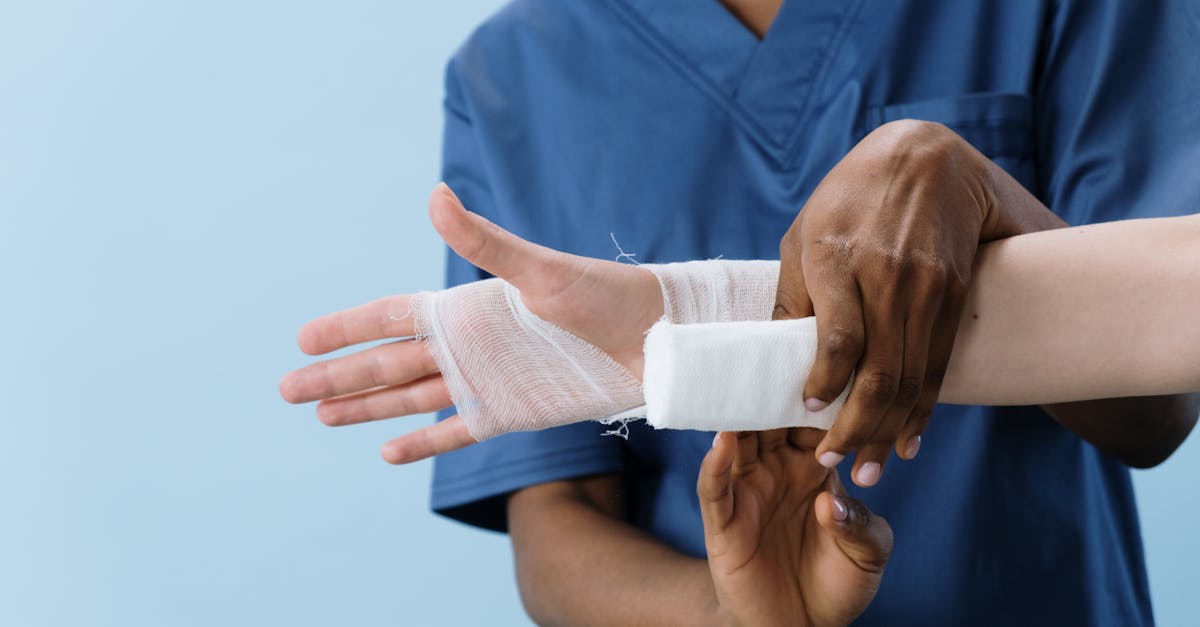
- Create a sling from a triangular bandage or large cloth (shirt sleeve works) to support the arm against the body, keeping elbow at 90°
- A swathe (a second bandage tied around the body, securing the arm against the chest) prevents the arm from swinging
Elbow fracture: Splint in the position found. If the elbow is bent, splint bent. If extended, splint extended. Do not force it either way. An improvised posterior splint (rigid material running behind the elbow and up the back of the upper arm) secured with wrapping keeps it stable.
Hand and finger fractures: Individual fingers can be buddy-taped to adjacent fingers. For the hand as a whole: position in the position of function (like holding a can of soda — slight fist), pad well, and splint with rigid material (SAM splint or a small flat piece of wood) on the palm side.
Lower Extremity Splints: Ankle, Lower Leg, Knee, Thigh {#lower-extremity}
Ankle fracture or severe sprain: The air splint (a pneumatic bladder you inflate around the ankle) is ideal and worth carrying in any backcountry kit. Without one: improvise with a SAM splint or wrapped sleeping pad in a “U” shape around the ankle, secured above and below.
The boot can serve as its own splint if swelling isn’t too severe — leave it on and lace it tight. This works surprisingly well for ankle injuries.
Lower leg fracture (tibia/fibula): Needs rigid splinting that immobilizes ankle and knee. Two trekking poles — one on each side of the leg — padded and wrapped are excellent. A sleeping pad folded into a U-shape around the leg and wrapped is also effective.
Knee: Splint in the position found. For most knee injuries this is a slight bend. A long rigid splint running from below the ankle to the hip, padded, and secured at multiple points maintains position.
Femur (thigh) fracture: This is a life-threatening emergency. The thigh can hold several liters of blood internally. Femur fractures are the only ones that require a traction splint, and improvising a traction splint correctly without training is difficult.
What you can do:
- Control bleeding (external, if any)
- Immobilize with a long leg splint
- Treat for shock (lay flat, keep warm)
- Evacuate urgently by the fastest means possible
The femur is not a wait-and-walk-out situation unless you have absolutely no other choice. Get help coming to you.
Spine and Pelvis: When NOT to Improvise {#spine}
Field splinting skills apply to extremity fractures. Spinal injuries and pelvic fractures are different situations that require different management.
Spine: If someone has fallen from height or experienced significant force and has neck or back pain, tingling, numbness, or any neurological symptoms — assume spinal injury. Minimize movement. Stabilize the head and neck manually (not improvised cervical collars, which are difficult to do correctly and often inadequate). Call for rescue. Moving a spinal injury patient incorrectly can convert a partial injury to complete paralysis.
Pelvis: A fractured pelvis can bleed internally at a rate that’s rapidly fatal. Improvised pelvic binders (a wide belt or sheet wrapped around the pelvis at the greater trochanters) can help reduce bleeding. But this situation requires urgent evacuation and advanced medical care.
More detail on these and other critical wilderness injuries is in the wilderness first aid complete guide — required reading for anyone who spends serious time in remote terrain.
Signs the Splint Is Too Tight {#too-tight}
Check the fingers or toes (whichever are below the injury) at regular intervals — every 20-30 minutes if you’re moving.
Loosen the splint immediately if you notice:
- Skin turning pale, gray, or blue below the splint
- Capillary refill taking more than 2 seconds (press the nail, release, count how long for color to return)
- Numbness or tingling the patient wasn’t having before you splinted
- Cold fingers or toes when the skin above the splint is warm
- The patient saying the splint feels “too tight” or pressure is increasing
A splint that cuts off circulation creates a second injury on top of the fracture. Loosen and re-secure. Better a slightly loose splint than a tight one.
Common Mistakes:
- Securing directly over the fracture site — this causes pain and puts pressure on the injury
- Not padding enough — hard material on bony prominences (ankle, wrist, elbow) causes pressure sores quickly
- Making the splint too short — needs to immobilize the joint above and below, not just the fracture itself
- Not checking neurovascular status before and after — you need the baseline to recognize deterioration
Getting the Patient Out {#evacuation}
After splinting, your job is to get the person to definitive care. The splint buys you time and stability for movement — it’s not a treatment, it’s a transport aid.
Can they walk? Upper extremity fractures: usually yes, if pain is manageable. Lower extremity fractures: sometimes, with improvised crutches (trekking poles work) for non-weight-bearing fractures like fibula. Femur fractures: no.
How far is it out? A two-mile, mostly-flat trail with a wrist fracture is very different from six miles of technical terrain with a lower leg fracture. Make an honest assessment. Improvised litters (two trekking poles, a jacket, or sleeping bag as the carry surface) can work for shorter distances with multiple people.
Cell service check: Try a 911 call first — some areas that show no bars for regular cell service will still connect an emergency call using any available network. Emergency satellite communicators like the Garmin inReach are worth every penny for remote terrain.
In the incident I mentioned: we found two bars of cell service on a high point about a mile from the injury site. Called ahead to let the ER know we were coming. It made the handoff smoother and probably saved him 45 minutes of waiting.
Know the wilderness first aid protocols before you go remote. A full wilderness first responder course is the best investment for anyone who guides, hunts remote, or spends extended time far from evacuation resources. The knowledge costs time to get. Not having it costs more.